The 9 best 99designs alternatives in 2026 (honest comparison)
TABLE OF CONTENTS
TL;DR
The best 99designs alternative depends on what you actually need. For ongoing design work, a flat-rate subscription like ManyPixels beats the contest model on cost-per-asset and consistency.
✅ For a one-time logo on a budget, a DIY maker like Looka works. For a single specialized project, a marketplace like Upwork or Toptal fits.
💡Contests only make sense when you want lots of concepts for one project and don't mind the guesswork.
❌ Skip 99designs entirely if design is a recurring line item, not a one-off.
99designs popularized logo contests years ago, and it still charges by the project: a logo contest runs from $249 on the Bronze tier to $1,050 on Platinum, and that is before you need a second thing designed. If you are searching for 99designs alternatives, you have probably already felt the catch. The contest model is built to sell you one project at a time, and it re-introduces you to a new stranger every time you come back.
And that’s exactly the angle most “best” alternatives overlook. The “best” tool depends entirely on whether you need one asset or a steady stream of them.
What is 99designs, and why look for an alternative?
99designs is a design marketplace, owned by Vista since 2020, that works two ways: you can run a design contest where multiple freelancers submit concepts and you pick a winner, or you can hire one designer directly for a 1-to-1 project. It is best known for logo and brand contests.
The model works fine for a single, well-defined project. The problems show up when your needs grow. Contest pricing stacks up fast, since every new logo, landing page, or ad set is a fresh contest with its own fee. Quality is a lottery: many entrants are building portfolios, so you sift through dozens of weak concepts to find one good one. And on 1-to-1 projects, 99designs adds a 5% platform fee on top of the designer's quote.
The real issue is continuity. Every contest starts from zero. The designer who nailed your logo has no memory of your brand when you come back for social graphics, so you re-brief, re-explain, and re-roll the dice. That hidden re-briefing cost never appears on a pricing page, and it is the single biggest reason teams with ongoing design needs move off contest platforms.
Prices are approximate and change often. Check each provider's site for current rates.
1. ManyPixels: flat-rate design for teams that never stop needing it
{{GENERAL_PORTFOLIO="/dev/components"}}
Starting price: ~$699/month
Model: Unlimited-request subscription
Turnaround: 24 to 48 hour first drafts
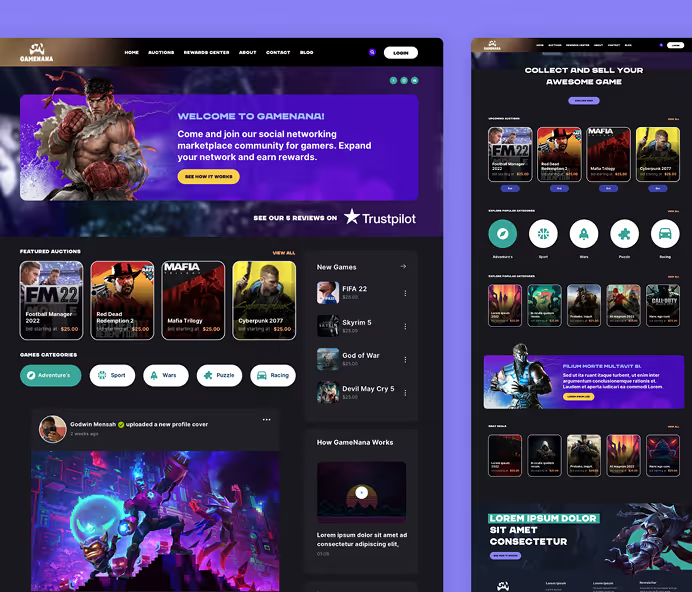
If 99designs frustrated you because every project started over, ManyPixels is the direct answer. Instead of paying per contest, you pay a flat monthly fee and submit as many requests as you want. A designer or small team learns your brand once and keeps it, so the fifth project looks like the same company made it as the first. That continuity is exactly what the contest model cannot give you.
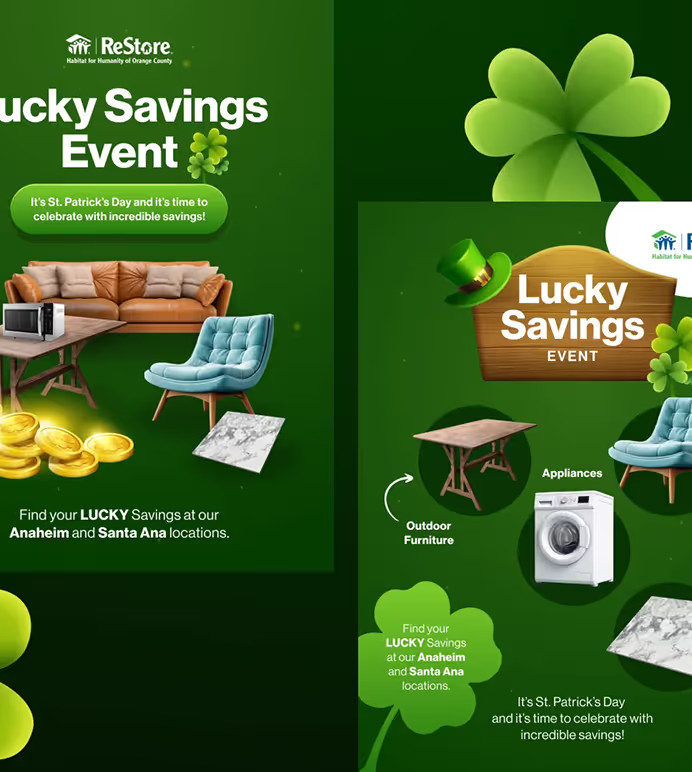
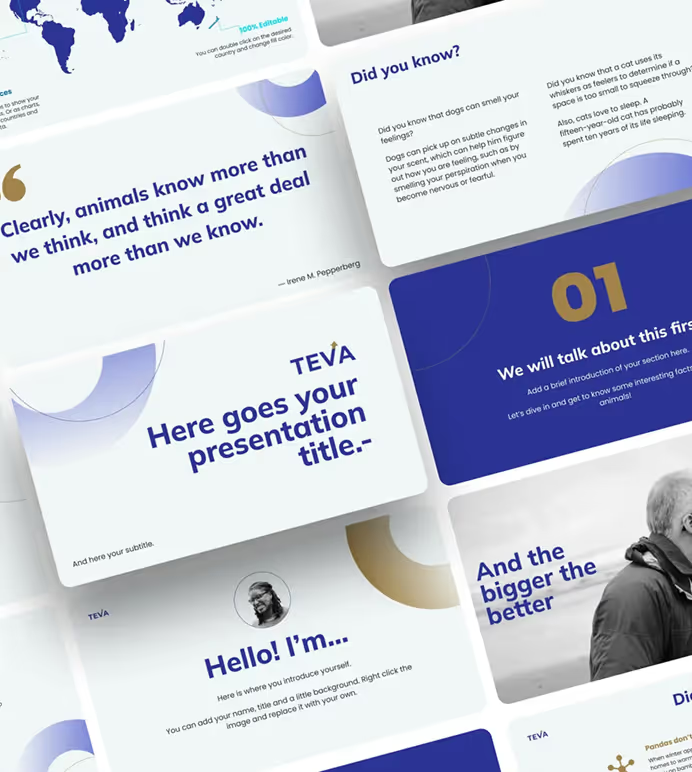
It’s important to remember though that unlimited means requests not finished designs (you’re still working with actual human designers, not AI). ManyPiixels delivers a daily output every business day, not everything at once. A typical day is 2 to 3 social graphics, or one logo draft, or a first draft of a landing page, with complex projects moving forward a bit each day. That model covers real breadth: logo and brand design, web and landing pages, social, illustration, motion, and presentations, without the per-category upcharges contests hit you with. Worth knowing: 72% of customers pick a plan with a dedicated designer over the shared queue, which tells you what buyers actually want from a 99designs replacement, a consistent partner, not another anonymous pool.
There is no free trial, so you test it by starting a plan and running a real project through it, and you can pause for $10/month whenever work slows. Best for: teams with recurring design needs across more than one asset type ✅ Not ideal for: someone who needs exactly one logo and nothing else ❌
2. Design Pickle: the other big subscription, priced for higher volume
Starting price: Custom quote (no public pricing)
Model: Unlimited-request subscription
Turnaround: 1 to 2 business days
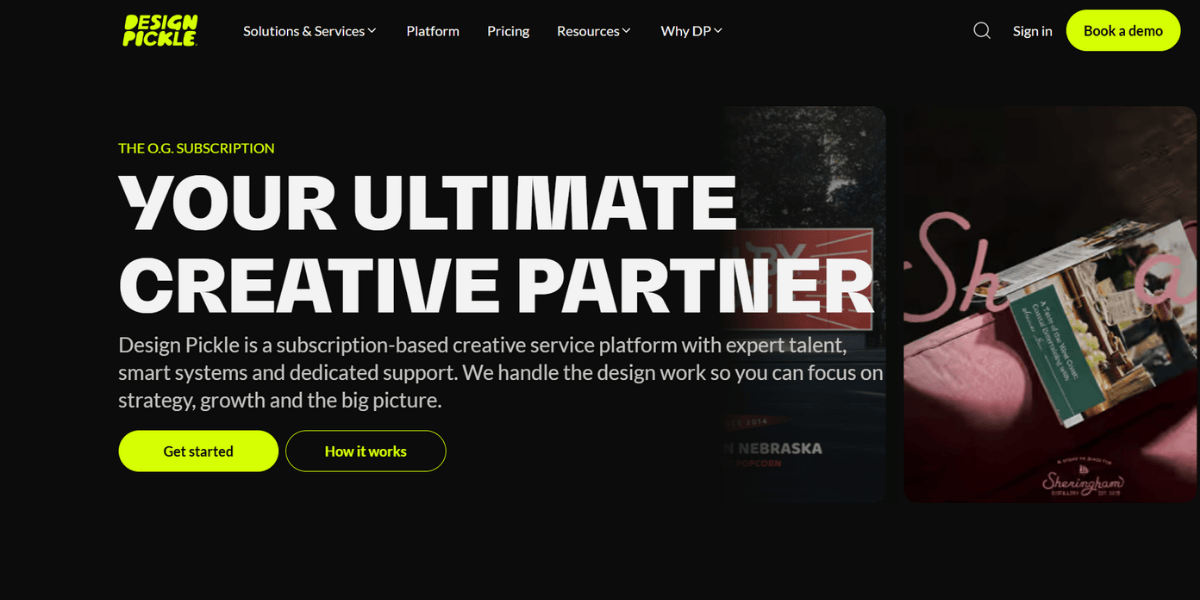
Design Pickle is the most recognized name in unlimited design, and it earns the reputation on reliability. The platform is polished, the request system is mature, and for a marketing team pushing high daily volume it holds up well. If you value brand recognition and a proven operation, it is a safe pick.
The catch is transparency. Design Pickle removed its public pricing and now sizes each plan on a sales call ("you get the number on the call"), so you can't compare rates before talking to them. Third-party trackers have pegged its entry graphics plan in the ballpark of $1,300 or more per month, which is roughly double ManyPixels' published entry tier, but treat that as an estimate rather than a listed price. If you want to know the real cost before committing, you have to book the call.
Best for: established marketing teams with high, steady graphic volume ✅ Not ideal for: startups or solo founders watching the first invoice ❌ For a fuller breakdown, see our Design Pickle alternatives guide.
3. Penji: full-scope graphics, but no longer the cheap option
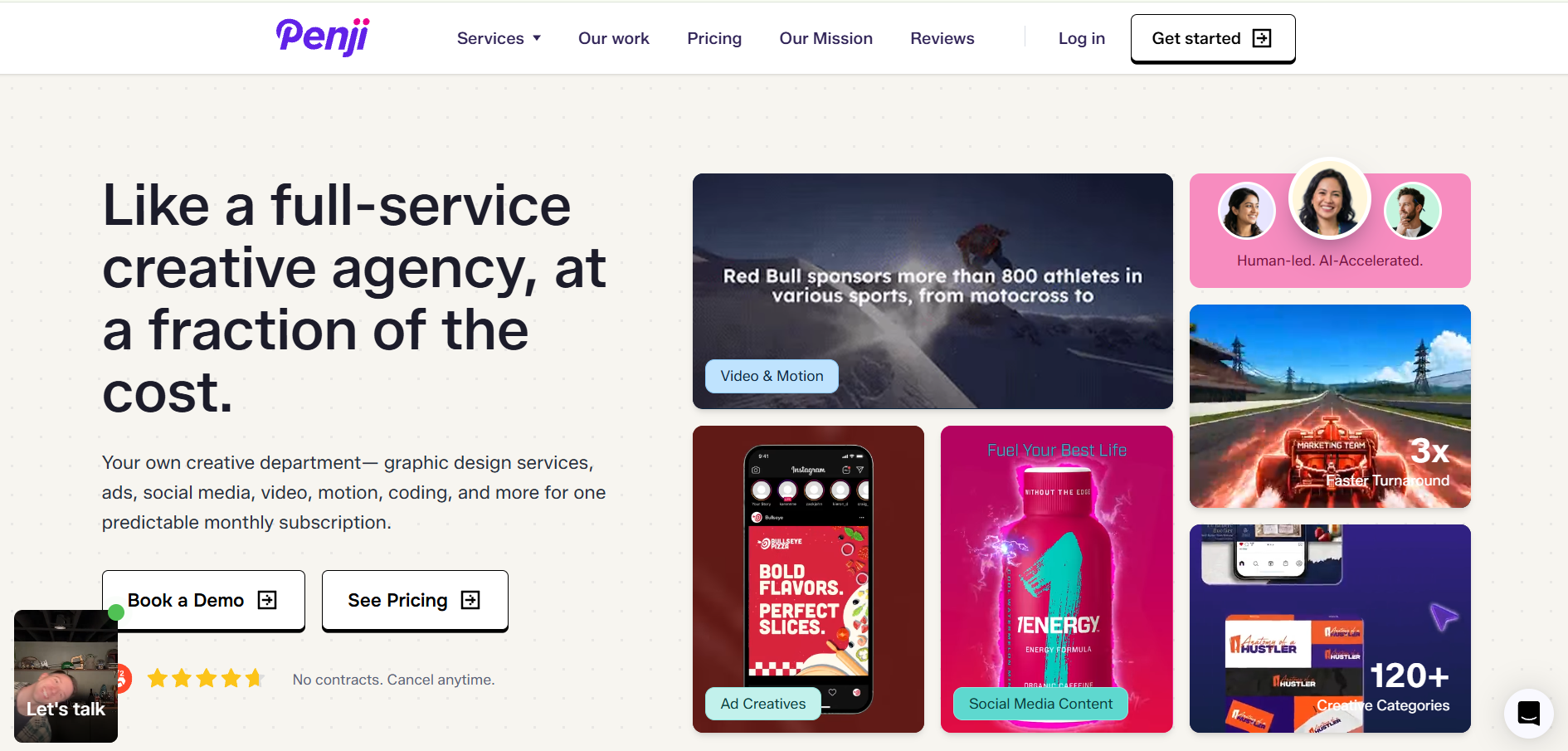
Starting price: ~$995/month
Model: Unlimited-request subscription
Turnaround: 1 to 2 business days
Penji used to be the budget entry point in this category, but it reworked its plans and the cheap self-managed tier is gone. The new entry plan is Marketing & Ads at around $995/month, and to its credit that plan is genuinely full-scope on graphics: branding, logos, ad creative, social, email, print, packaging, Canva, presentations, illustrations, and infographics, all managed by an art director.
The catch is now the price ladder. Video, motion graphics, and web or landing page design are not in the entry plan; those start on the Agency tier at roughly $1,995/month, and the top Creative Team plan runs about $4,500/month. So Penji is a strong full-scope graphics option, but at $995 to start it costs more than ManyPixels' entry tier while leaving web and motion behind a much pricier plan. Map your must-have deliverables against the tiers before you sign up.
Best for: teams that want art-director-managed graphics and don't need video or web on the entry plan ✅ Not ideal for: buyers expecting a sub-$700 starting price or needing web and motion included ❌
4. Kimp: built for social and marketing volume
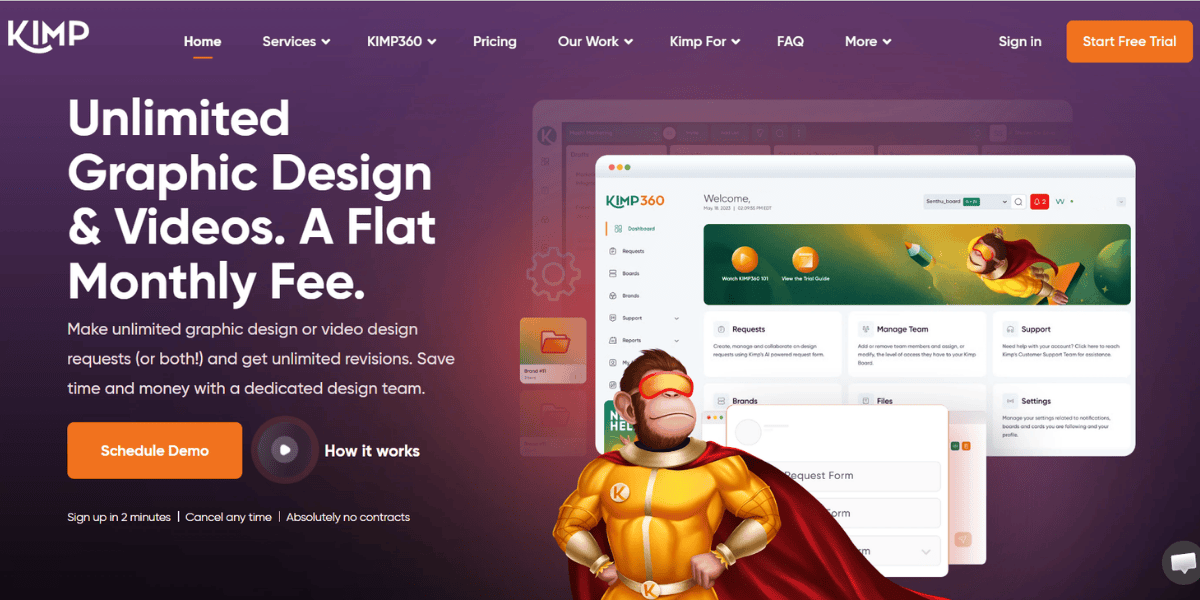
Starting price: ~$699/month
Model: Unlimited-request subscription
Turnaround: 2 to 3 business days
Kimp splits its service into Graphics and Video plans, with a combined option, and it is genuinely strong for teams pumping out a high volume of social and marketing creative. If your work is mostly Instagram, ads, and short video, Kimp is purpose-built for that rhythm.
The trade-off is the split. Because Graphics and Video are separate subscriptions, a team that needs both ends up paying for two plans, which erodes the value fast. Turnaround also tends to run a touch slower than the 24-hour promises elsewhere. It is a solid social-content engine, less so a single home for every design type.
Best for: high-volume social and ad creative ✅ Not ideal for: teams that need graphics and video handled under one flat fee ❌
5. DesignCrowd: the closest thing to 99designs itself
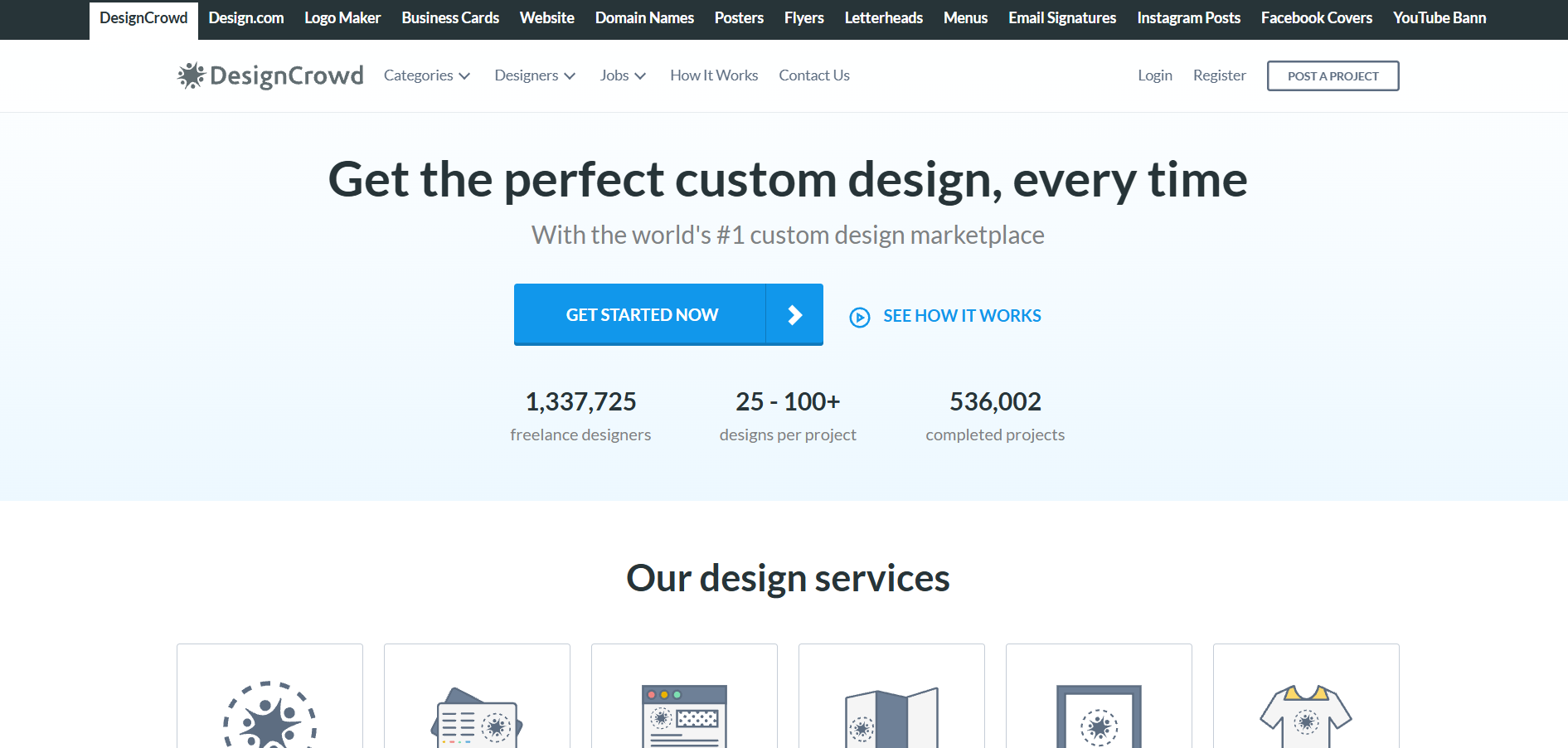
Starting price: ~$69 per project
Model: Contest crowdsourcing
Turnaround: 3 to 10 days
If you liked the 99designs contest format and just want a different venue, DesignCrowd is the nearest match. You post a brief, freelancers submit concepts, and you pick a winner. Contest fees range from about $69 to $779 depending on category, and you often get a large pool of submissions.
The upside and downside are the same as the platform you are leaving. You get lots of options, but you also get the same variance in quality and the same one-and-done relationship. It solves "I want a different contest site." It does not solve "contests are the wrong model for ongoing work."
Best for: a one-off project where you want many concepts to choose from ✅ Not ideal for: recurring work or brand consistency ❌
6. Designhill: contests, direct hire, and a logo maker in one
Starting price: ~$249 per contest
Model: Contest + freelancer hire + AI tools
Turnaround: 3 to 7 days
Designhill hedges across formats. You can run a logo contest starting around $249, hire a freelancer directly, or use its AI logo maker for a quick DIY option. That flexibility is the selling point: three ways to get design under one roof.
The flip side of doing three things is that it does none of them at the depth of a specialist. The contest pool is smaller than 99designs, the freelance side is thinner than Upwork, and the logo maker is more basic than Looka. It is a reasonable middle ground, not a category leader in any one lane.
Best for: budget logo contests with a fallback DIY option ✅ Not ideal for: teams wanting best-in-class quality in any single format ❌
7. Fiverr and Upwork: when you want one specific freelancer
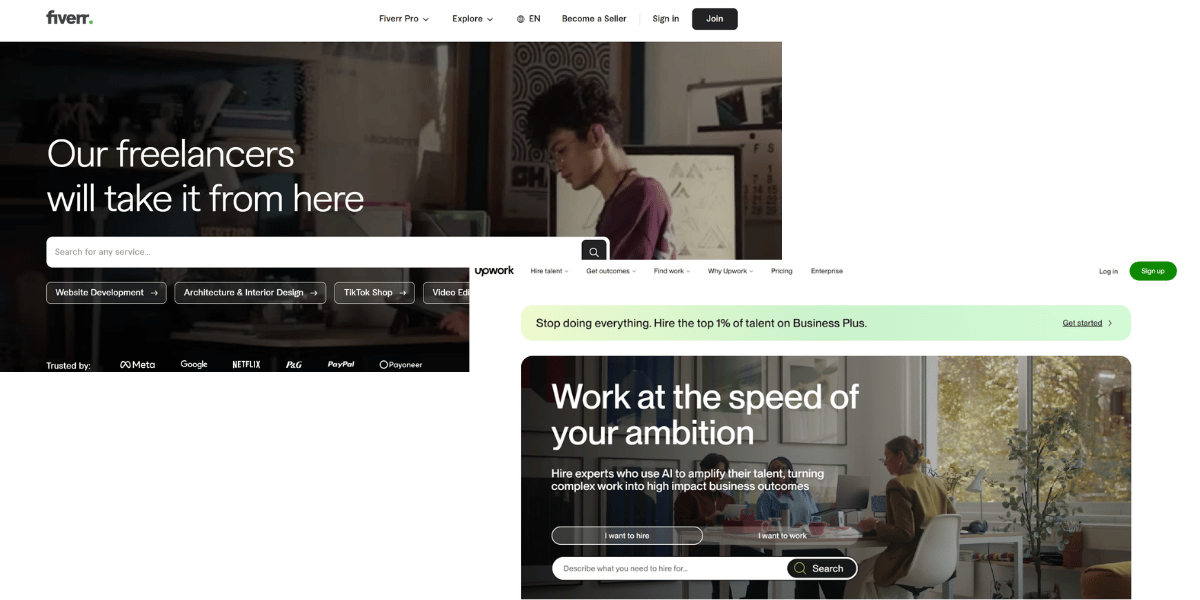
Starting price: Varies by freelancer
Model: Freelance marketplace
Turnaround: Varies
Sometimes the answer to 99designs is not a platform at all, but a single person you choose yourself. Fiverr works by fixed-price gigs, so you browse packages and buy one, while Upwork leans toward hourly contracts and longer relationships with time tracking and interviews. Both give you direct control over exactly who does the work.
The trade-off is that you become the manager. You vet portfolios, negotiate scope, handle revisions, and carry the risk if the person disappears mid-project. For one clear task with a designer you trust, that is fine. For ongoing volume, the management overhead is the same reason people leave freelancing for subscriptions in the first place. Our agency vs. freelancer vs. subscription breakdown covers when each one wins.
Best for: a single, specific project with a freelancer you pick ✅ Not ideal for: anyone who doesn't want to manage designers ❌
8. Toptal: senior freelancers for high-stakes work
Starting price: Premium (deposit required)
Model: Vetted freelance network
Turnaround: Varies
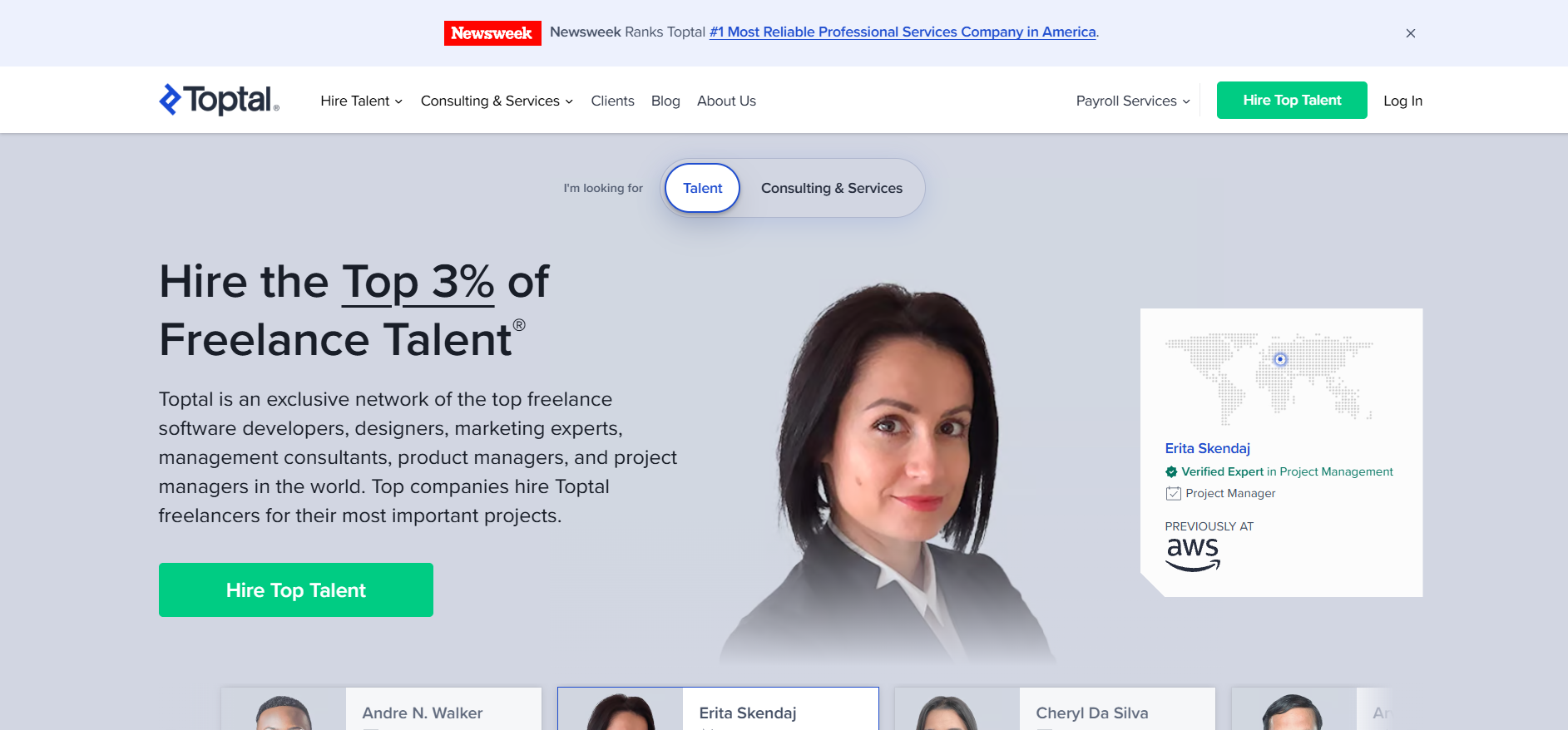
Toptal sits at the opposite end from a contest. It screens applicants heavily and markets access to roughly the top 3%, aimed at serious UX, product, and design-system work where a weak result is expensive. When the stakes are high and you need a genuine senior, this is the credible pick.
You pay for that filter. Toptal is premium-priced with a deposit to start, which puts it out of reach for routine marketing graphics. This is a scalpel for high-value projects, not a tool for churning out weekly social posts.
Best for: complex, high-stakes UX or product design ✅ Not ideal for: everyday graphic volume on a normal budget ❌
9. Looka and Tailor Brands: a cheap one-off logo in minutes
Starting price: ~$20 one-time (Looka)
Model: DIY AI logo maker
Turnaround: Minutes
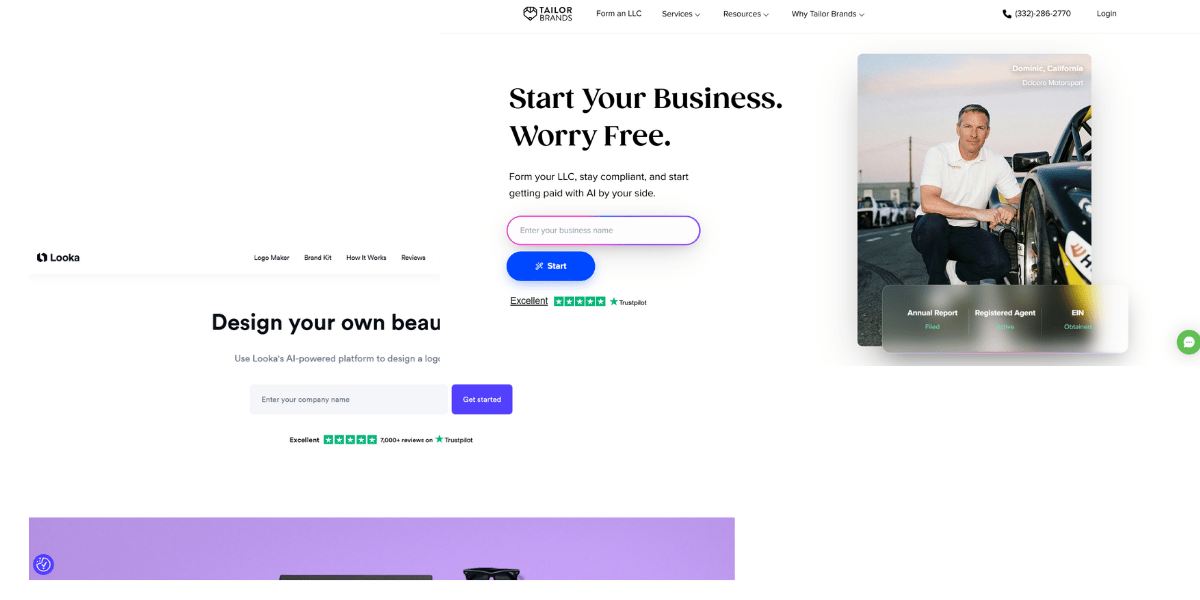
If all you truly need is a logo and the budget is tiny, skip human design entirely. Looka generates logos with AI and sells a basic file for around $20 or a brand kit on subscription, and Tailor Brands runs a similar AI-driven model from roughly $9.99/month. For a side project or a quick placeholder, either gets you something usable in minutes.
Just be clear on the ceiling. AI makers produce template-based results that other businesses can generate too, with no strategy, no revisions from a human, and no help when you need a matching landing page next month. It is the cheapest option here for a reason. Great for a one-off, useless for a design program.
Best for: a fast, low-cost logo for a small or early project ✅ Not ideal for: a brand that needs to stand out or grow ❌
Contests vs. subscriptions vs. marketplaces: which model actually fits?
The single most useful thing you can do is stop comparing individual brands and pick the right model first. Contests suit one-off projects where you want many concepts and don't mind variance. Marketplaces suit a specific project where you want to choose the person. Subscriptions suit ongoing, multi-asset work where consistency and cost-per-asset matter more than any single deliverable.
The math is where it becomes obvious. A 99designs logo contest at $499 gets you one logo. That same budget on a subscription gets you a month of daily output across logos, social, web drafts, and more. Below a handful of projects a year, contests or a freelancer win on cost. Above that, a flat rate almost always wins, because the number that matters is cost per delivered asset, not the sticker price of any one project.
How to choose your 99designs alternative
Answer these three questions and the choice makes itself.
If you need exactly one logo and nothing else: use a contest site like DesignCrowd or Designhill, or a DIY maker like Looka if the budget is very tight. Paying a monthly subscription for a single asset makes no sense.
If you have one specialized, high-stakes project: hire a specific freelancer on Upwork, or Toptal if the work is senior UX or product design. You want a named person accountable for the outcome.
If design is a recurring need across multiple asset types: use a flat-rate subscription. This is the biggest and most underserved group, teams who kept running 99designs contests because they didn't realize a monthly plan would cost less per asset and keep their brand consistent. Start with ManyPixels for balanced scope and price, or Design Pickle if volume is very high.
Why teams switch from 99designs to ManyPixels
Most people who leave 99designs aren't leaving because of one bad contest. They leave because they realized they were buying design the hard way, one project and one stranger at a time, when their real need was continuous.
Here is what changes on a subscription like ManyPixels:
- 💰 Predictable cost. One flat monthly fee instead of a new contest bill every time you need something, with pause for $10/month when work slows.
- 🎨 One team that knows your brand. The same designer builds on the last project instead of starting from a blank brief, so output stays on-brand as you scale.
- ⚡ Faster drafts. First drafts in 24 to 48 hours versus a 7-to-10-day contest cycle.
- 🚀 Real scope. Logos, web, social, illustration, and motion under one plan, not one category per contest fee.
As Joe Howard, Founder of WP Buffs, put it: "To me, it's great value to pay a monthly subscription and get access to an entire design team, instead of hiring a designer who would likely cost more."
👉 Explore ManyPixels plans to see which tier matches your volume.
Frequently asked questions
The bottom line
99designs is a good way to buy one logo and a poor way to buy design as an ongoing function. If your needs are recurring, a flat-rate subscription wins on cost per asset and on the consistency contests structurally can't provide, and ManyPixels covers the widest scope at the lowest entry price of the major subscriptions. If you truly need just one thing once, a contest or a DIY maker is the cheaper call. Match the model to the job, and the specific brand matters far less than getting that first decision right.
Still weighing your options? We've tested this whole category, so if you want a gut check on which model fits your volume, compare the ManyPixels plans and see where the numbers land.
{{GRAPHIC_BANNER="/dev/components"}}

Having lived and studied in London and Berlin, I'm back in native Serbia, working remotely and writing short stories and plays in my free time. With previous experience in the nonprofit sector, I'm currently writing about the universal language of good graphic design. I make mix CDs and my playlists are almost exclusively 1960s.

Top-quality designers
A complete creative team at your fingertips: graphic and web designers, illustrators, and more.

Lightning-fast turnaround
Get start today and receive your first update on the next business day.

All-inclusive pricing
Unlimited requests and revisions. One flat monthly fee. No surprises.

Flexible & scalable model
No contract. Scale up and down as needed. Pause or cancel at anytime.
Continue reading
Explore some of our best designs
Get inspired by a curated selection of ManyPixels work. Download the portfolio to see what our team can create.