Advertising trends in 2026: what's working right now
TABLE OF CONTENTS
Key takeaways
- ✅ Agentic AI goes beyond drafting copy: it now autonomously builds audiences, places bids, and optimizes campaigns in real time.
- ✅ Social commerce is table stakes in 2026: TikTok Shop, Instagram Shopping, and shoppable CTV are turning passive viewers into buyers.
- ✅ Authenticity still wins. UGC and creator-led content consistently outperform polished brand campaigns.
- ✅ Personalization has leveled up. Dynamic creative optimization now swaps headlines, images, and offers based on real-time user signals.
Advertising trends refers to the recurring shifts in how brands create, distribute, and optimize ad content to connect with audiences and drive results. These shifts are shaped by changes in technology, consumer behavior, and the platforms where audiences spend their time.
Ad design evolves fast. Look back at campaigns from five or six years ago and most of them already look dated. This is especially true in digital advertising, where platforms, formats, and audience expectations change season by season.
Whether you're reviewing an existing ad strategy or building one from scratch, here are the advertising trends shaping 2026 and what each one means in practice. For context on how advertising fits into your broader marketing mix, see our guide to marketing vs. advertising.
Artificial intelligence and agentic advertising
AI in advertising has evolved well beyond drafting copy or generating image variations. The biggest shift in 2026 is agentic AI: systems that don't just assist marketers but actively execute strategy, building audience segments, placing bids, and optimizing creative in real time without requiring manual input at each step.
Brands are also adapting to Generative Engine Optimization (GEO). As more consumers search using ChatGPT, Google's AI Overviews, and similar tools, ad and content strategies are shifting to optimize for these platforms alongside traditional search engines. It's a meaningful change in where discovery happens.
That said, AI works best as an accelerator, not a replacement for creative judgment. Use it to generate variations, automate targeting decisions, and test at scale. The brief, the brand voice, and the creative direction still need human input. AI design tools consistently perform better when directed by someone who understands the audience, and that's not changing any time soon.
Streaming, connected TV, and retail media
Streaming is where most audiences are, and advertisers are following. Connected TV (CTV) campaigns let brands reach viewers with personalized video messaging and tie that reach across mobile, desktop, and in-store to create a true omnichannel experience. Consumers no longer follow linear viewing habits, which means a single-channel ad strategy leaves significant reach on the table.
Retail Media Networks (RMNs) are the other major piece of this shift. Amazon, Walmart, and Tesco now let brands advertise directly on their platforms using first-party purchase data, reaching shoppers at the point of buying intent. Unlike cookie-based targeting, this data comes from actual transactions, which makes it far more precise as third-party cookies continue to phase out.
Shoppable CTV ads are expected to go mainstream in 2026, combining streaming reach with a direct path to purchase in the same format. If you're running video ads, this is worth building into your channel planning now. Our overview of retail advertising trends covers the broader context here.
Social commerce and short-form video
Social commerce has moved from experimental to essential. TikTok Shop, Instagram Shopping, and YouTube Shopping now let users discover and buy products without ever leaving the platform. Short-form video is the primary delivery format: Reels, TikTok, and YouTube Shorts drive both awareness and direct conversion in the same ad unit.
Net 61% of marketers plan to increase their investment in creator content in 2026, according to Kantar's Marketing Trends report. The reason is simple: content that looks native to a platform consistently outperforms content that looks like an ad. Social commerce rewards brands that can blur that line.
For brands producing ad creative at scale, this means designing for vertical formats first and building content that travels across Reels, TikTok, and Shorts without heavy adaptation. Video marketing trends and social commerce are now the same conversation.
Authenticity and user-generated content
The growth of AI-generated content has made authentic, human-made creative more valuable, not less. Audiences have become skilled at recognizing polished AI output, and they trust it less than content that comes from real people. UGC, customer testimonials, and creator-led content consistently outperform brand-produced campaigns in both engagement and conversion.
Consumers trust recommendations from peers and independent voices significantly more than they trust brand messaging directly, a pattern that the Edelman Trust Barometer has tracked consistently for over a decade. That gap has widened as AI-generated content has proliferated. UGC also tends to be faster and cheaper to produce than traditional campaigns, which makes it a high-value option for brands working with limited production budgets.
A practical approach: build a UGC pipeline alongside your paid creative. Run paid ads using real customer content, use the performance data to guide what you produce in-house, and treat your best customers as a creative resource, not just an audience.
Diversity and representation
Inclusive advertising is no longer a differentiator. It's a baseline expectation. Audiences notice when brands represent people who look like them, and they notice even more when brands don't. This applies across age, body type, ethnicity, religion, disability, and background.
The brands getting this right aren't checking boxes. They're being deliberate. John Lewis's 2025 Christmas ad explored the often-unspoken dynamic in father-son relationships and resonated widely because it showed something real rather than aspirational. Dove's Real Beauty campaign has sustained cultural relevance for over two decades by showing actual customers rather than models.
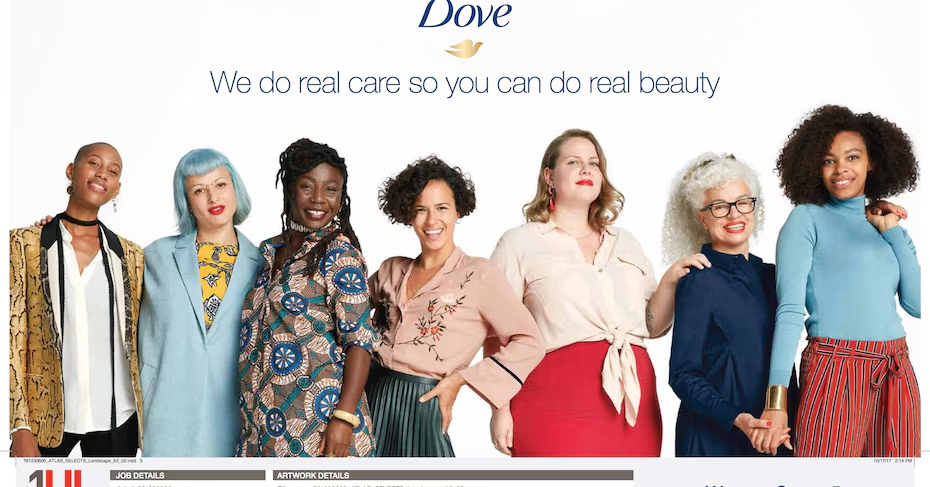
The risk in this space is inauthenticity. Audiences are quick to identify representation that's been added as a marketing calculation rather than a genuine brand position, and the backlash tends to be more visible than the upside. If you're unsure where to start, audit your existing ad creative: count who appears in it and who doesn't. That audit usually tells you more than a strategy deck.
Sustainability
According to 2023 CPG Sustainability Report by NIQ, 92% of shoppers say sustainability is important when choosing a brand.
And so, environmental values have moved from niche to mainstream in advertising, and with that shift comes more scrutiny. Greenwashing claims are being challenged by regulators in the EU, UK, and US, which means vague sustainability messaging ("we care about the planet") is increasingly a liability. Specific, verifiable claims build trust; sweeping statements invite pushback.
In product and packaging advertising, this shows up as a preference for minimal, material-honest design. In brand campaigns, it shows up as brands taking concrete positions rather than making general statements about values. The brands winning in this space are showing what they've changed, not just what they believe.
3D design and bold visuals
Three-dimensional design continues to grow in advertising, and AI tools have made it significantly more accessible. What used to require specialist software and extended production timelines can now be prototyped quickly, which means more brands are using 3D in formats that wouldn't have been cost-effective before.
The dominant direction in 2026 is bold and slightly surreal: 3D elements combined with photography, motion graphics that blur the line between real and rendered, and a general push away from flat, static formats. This approach works especially well for younger audiences and for brands in tech, fashion, and consumer products where novelty is part of the message.
It's not the right choice for every brand or every brief. But if your audience skews younger and your brand has flexibility to experiment, 3D visuals are worth testing in your next digital campaign. Our team at ManyPixels handles ad creative across all these formats if you need a starting point.
Personalization and dynamic creative optimization
Personalization in 2026 means more than adding a first name to an email subject line. Dynamic creative optimization (DCO) lets brands swap ad elements, headlines, images, and offers in real time based on who's seeing the ad and what signals are available about that person's context and behavior.
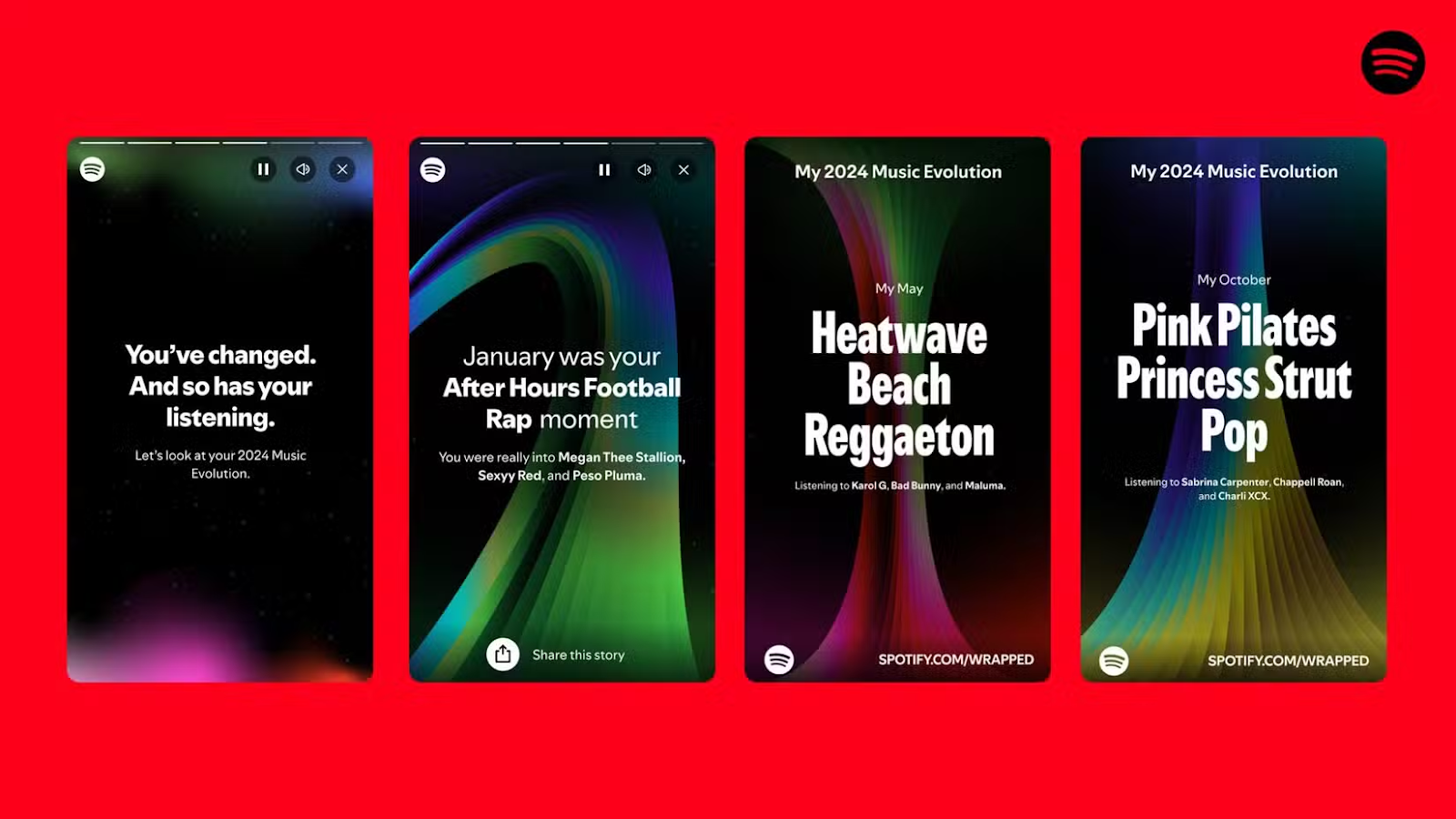
Spotify Wrapped is the clearest example of this at scale. In 2024, Wrapped introduced "Your Music Evolution," showing listeners how their taste had shifted through different phases of genres and artists across the year. Every user got a different story built from their own data. The campaign generated billions of social shares because the content was, by design, impossible to replicate for someone else.
Nike's personalized product recommendations in email and app ads take the same principle into direct response: the creative changes based on what you've browsed and bought. According to Smartly's 2026 Digital Advertising Trends report, 75% of consumers say they're more likely to buy from brands that deliver personalized content.
The direction this is heading is what some researchers are calling uber-personalization: ads that respond not just to browsing history but to real-time signals including current location, time of day, and recent behavioral patterns. The technology is being built now. For most brands, DCO is where to start.
Data visualization
Data-driven advertising doesn't just mean using data for targeting. It also means using data as the creative material itself. Brands are incorporating charts, statistics, progress bars, and numeric highlights directly into ad creative to build trust and make abstract claims tangible and verifiable.
Google's annual "Year in Search" turns billions of search queries into emotional, shareable storytelling, showing people what the world collectively cared about. Fintech brands like Monzo and Revolut regularly incorporate savings goals, spending breakdowns, and progress trackers into their advertising, making financial products approachable without oversimplifying them.
The underlying dynamic is that audiences are increasingly skeptical of bold marketing claims. A chart showing average savings over time outperforms a headline saying "save more." If your product creates measurable results, showing the measurement is usually more persuasive than describing it.
Influencer marketing and creator partnerships
Influencer marketing has shifted away from one-off sponsorships and toward longer-term creative partnerships. Instead of paying someone to hold a product and post about it, the most effective brand collaborations in 2026 involve co-creating content with creators whose audiences actually match the brand's target market.
Gymshark built its brand identity through exactly this model. Its creator partners produce workout content featuring the products rather than standalone ads, which means the content fits naturally into a fitness audience's feed rather than interrupting it. The result is higher engagement and more durable brand association than a traditional sponsored post.
Micro-influencers (typically 10,000 to 100,000 followers) are increasingly valuable for brands that can't afford top-tier partnerships. Their audiences tend to be more engaged and more niche, which translates to higher conversion rates on the right product. Read more in our deep-dive on influencer marketing strategy.
Meme culture and playful weirdness
Ads that tap into internet-native humor and meme formats are consistently outperforming polished, corporate campaigns with younger audiences. Gen Z and Gen Alpha respond to brands that are self-aware, willing to be weird, and able to meet them on platforms and in formats they actually use rather than adapting traditional ad structures for social media.
Duolingo's TikTok strategy is the most cited example: its owl mascot appears in absurdist, meme-driven videos that rack up millions of views by being strange and entertaining rather than promotional.
Nutter Butter's TikTok takes the same approach even further into psychedelic territory, and won Ad Age's Social Campaign of the Year in 2025.
This requires knowing your audience well enough to know whether it fits. TikTok and Instagram Reels are the natural home for this kind of content, with younger users who respond to it. It doesn't work for brands that need to maintain a more formal tone, and forcing the register tends to backfire visibly and publicly.
Live and experiential advertising
Experiential advertising is expanding beyond physical pop-ups into live, broadcast, and interactive formats. Brands are building real-world moments and using livestreaming and social media to extend the reach of those moments to audiences who weren't present in person.
Reactive, real-time advertising is a related and growing practice. When a London Tube strike hit, Lime Bikes put up billboards reading "Good Service on All Limes," turning commuter frustration directly into brand awareness. When the CEO of Astronomer went viral for the wrong reasons, the company hired Gwyneth Paltrow as a temporary spokesperson and turned the moment into a deliberately self-aware campaign. Neither required a large budget. Both required fast creative execution and the organizational flexibility to move quickly when an opportunity appeared.
Live shopping is the commerce layer of this trend. Brands running live product demos on TikTok or Instagram, with in-stream purchase links, are creating a format that combines entertainment, trust-building, and direct conversion in a single session. It's one of the fastest-growing ad formats in markets where livestream commerce is already established.
Frequently asked questions
The bottom line
Advertising in 2026 is more platform-native, more personalized, and more human than it was even two years ago. AI handles more of the operational work, which means the creative judgment behind campaigns matters more, not less. The brands performing best are the ones who have figured out how to use the new tools without losing the human voice that makes ads worth watching.
Whether you're running social ads, CTV campaigns, or creator partnerships, the underlying question stays the same: does this ad feel like it belongs in the context where someone will see it?
If you need help producing ad creative that works across formats, ManyPixels can help. Our designers handle everything from social graphics and display ads to motion and video content, with first drafts back within 24 to 48 hours. See how our ad design service works, or explore our plans starting from $699 per month.
{{ADS_PORTFOLIO="/dev/components"}}

Having lived and studied in London and Berlin, I'm back in native Serbia, working remotely and writing short stories and plays in my free time. With previous experience in the nonprofit sector, I'm currently writing about the universal language of good graphic design. I make mix CDs and my playlists are almost exclusively 1960s.

Top-quality designers
A complete creative team at your fingertips: graphic and web designers, illustrators, and more.

Lightning-fast turnaround
Get start today and receive your first update on the next business day.

All-inclusive pricing
Unlimited requests and revisions. One flat monthly fee. No surprises.

Flexible & scalable model
No contract. Scale up and down as needed. Pause or cancel at anytime.
Continue reading


Explore some of our best designs
Get inspired by a curated selection of ManyPixels work. Download the portfolio to see what our team can create.