10 Best pitch deck design services in 2026 (compared by cost per deck)

TABLE OF CONTENTS

TL;DR
Pitch deck design in 2026 costs between $799 and about $6,000 for a finished 15 to 20 slide investor deck. Slidebean is the cheapest credible flat fee at $799 for up to 20 slides in four business days. Pitch Deck Fire publishes the clearest package ladder at $1,650, $3,999 and $5,999. Anything above $10,000 is enterprise work most founders raising a seed round do not need.
✅ Best overall value: Slidebean at $799 flat, up to 20 slides, four business days. No quote call, no scoping, no surprise.
🎨 Best for a story rebuild: Buffalo 7 and Waveup, both of which rewrite the narrative before touching a slide. Waveup publishes $100 per slide for design only, $5,000 and up for full service.
💰 Best when the deck is one of many assets: ManyPixels at $699 a month, because the same subscription covers the deck plus the data room, the one-pager and the website graphics.
⚠️ The catch nobody advertises: slide caps. All three Hype Presentations tiers stop at 10 slides, and 10 more cost £975. Whitepage Lite stops at 10. Pitch Deck Fire's entry package stops at 12. A seed deck is usually 15 to 20.
❌ Skip if: you are pre-revenue with no deck content written yet. Design cannot fix a story that does not exist. Write the narrative first, or buy a service that writes it with you.
Every roundup of pitch deck design services prints a price. Almost none of them print the same price for the same company.
We checked. One widely cited list gives Buffalo 7 three price tiers that turn out to be Hype Presentations' exact published figures, down to the pound. Superside appears as $5,000 a month on one page, $10,000 on another and $15,000 on a third. Slidebean shows up as $799, as $799 a month, as $149 a year, and as a range topping out at $14,999, which is what happens when a writer confuses an agency service with a software subscription. One list ranks Fiverr as a pitch deck designer.
None of this is malice. It is what happens when four incompatible pricing models get flattened into one column: a flat project fee, a per-slide rate, an hourly rate with a minimum commitment, and a monthly subscription. Quoting "$125 an hour" next to "$799" is not a comparison. It is two numbers in the same font.
So we normalised everything to the only question a founder actually has: what does one 15-slide seed deck cost me, and when do I get it. Every price below was taken from the provider's own live pricing page in September 2026, not from another roundup.
The top of the market is real, and it is worth knowing where it sits so you can recognise when you are being quoted into it.
Ochi Design lists a $10,000 minimum project size and a $200 to $300 hourly rate on its Clutch profile. Superside starts at roughly $15,000 a month on an annual commitment, plus a separate $1,000 monthly software fee. BrightCarbon works on enterprise quotes. Designity runs $5,995 a month for a 120-hour block. All four do excellent work. None of them is a sensible first purchase for a founder raising $1M to $3M, which is why they are cited here rather than listed below.
For the same reason, this list stops at about $6,000 per deck. That is the ceiling a seed or Series A founder can justify against the round they are raising.
1. ManyPixels: best when the deck is one of a dozen assets
{{PRESENTATIONS_PORTFOLIO="/dev/components"}}
Start with the honest caveat, because it decides whether the rest of this entry matters. If you need exactly one investor deck, with deep fundraising narrative work, and nothing else for the next six months, buy a specialist from further down this list. A subscription is the wrong choice for a single purchase.
If that is not your situation, ManyPixels is usually the better deal. A raise is rarely one deck. It is the deck, the teaser, the one-pager, the data room cover, the updated website hero, the LinkedIn graphics announcing the round, and then the revised deck after the first five investor calls tell you which slide is not landing.
Pricing is $699 a month on the Advanced plan, or $559 a month billed annually, with unlimited requests and unlimited revisions, and presentations included on every tier. Delivery is next business day on Advanced and Business, same day on the Assigned Designer and Design Team plans. The Business plan at $1,199 a month doubles daily output to two active items.
Run the comparison at the level of the round rather than the deck. A specialist charges $3,000 to $4,000 for the deck and then quotes separately for everything else. Three months of ManyPixels is $2,097 and covers all of it, revisions included. The revision point is the one founders underrate: decks change after investor feedback, and per-project agencies bill for that.
Where it loses: you get excellent designers, not fundraising consultants. If your problem is that the story does not hang together, Waveup or Buffalo 7 will fix something ManyPixels will not.
Explore ManyPixels plans to see how the tiers compare.
2. Slidebean: best flat fee in the category

Slidebean publishes the number almost everyone else hides. Pitch deck design is $799, flat, covering a redesign of up to 20 slides in four business days, with two rounds of design revisions and three rounds of content revisions. Deck writing is included, along with help on market size estimation and go-to-market framing.
That is the cheapest credible entry point to real agency work in this list, and it is the reason Slidebean appears in every competing roundup we checked, usually with the wrong price attached.
Above it sits the Strategy and Pitch Deck Sprint, starting at $6,000 over three to four weeks, which adds senior analyst consulting hours, design up to 30 slides and C-level sessions on fundraising strategy. Slidebean also sells AI deck software and templates separately, which is where the $99 and $149 figures in other lists come from. Those are different products.
Where it loses: 20 slides and two design rounds is a fixed box. If your deck needs custom illustration or heavy financial data visualisation, you will outgrow the $799 tier fast.
3. Pitch Deck Fire: the clearest package ladder
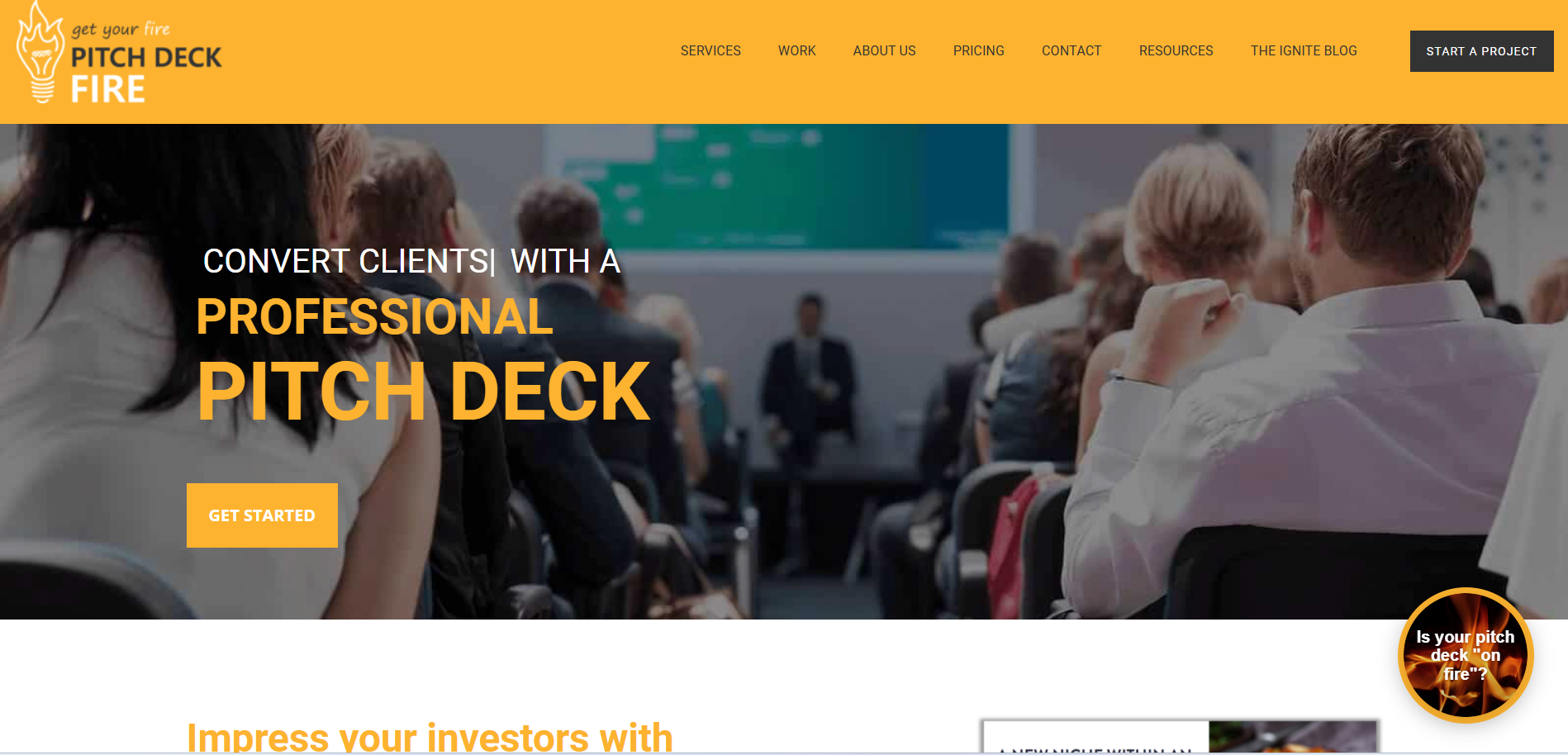
Pitch Deck Fire is the rare agency that publishes three complete packages with slide counts, design hours and prices, so you can self-select without a discovery call.
EmberScope is $1,650 for 10 to 12 slides with 10 hours of design. FlameScope is $3,999 for 15 to 20 slides with 20 hours of design and three pitch review sessions. BonfireScope is $5,999 for 21 to 35 slides with 40 hours of design. All three include mood board development, custom graphics, stock photography, an editable file with full rights, and unlimited revisions.
Unlimited revisions at a fixed price is unusual in project work and worth real money on a deck that will change after every investor meeting. Rush options at 10, 7 and 5 business days are available on request.
For a standard seed deck, FlameScope at $3,999 is the right tier, and the honesty of publishing that up front is worth more than it sounds.
Where it loses: the entry tier tops out at 12 slides, which is below most seed decks, so the real starting price for most founders is $3,999 rather than $1,650.
4. Waveup: best when the numbers are the problem
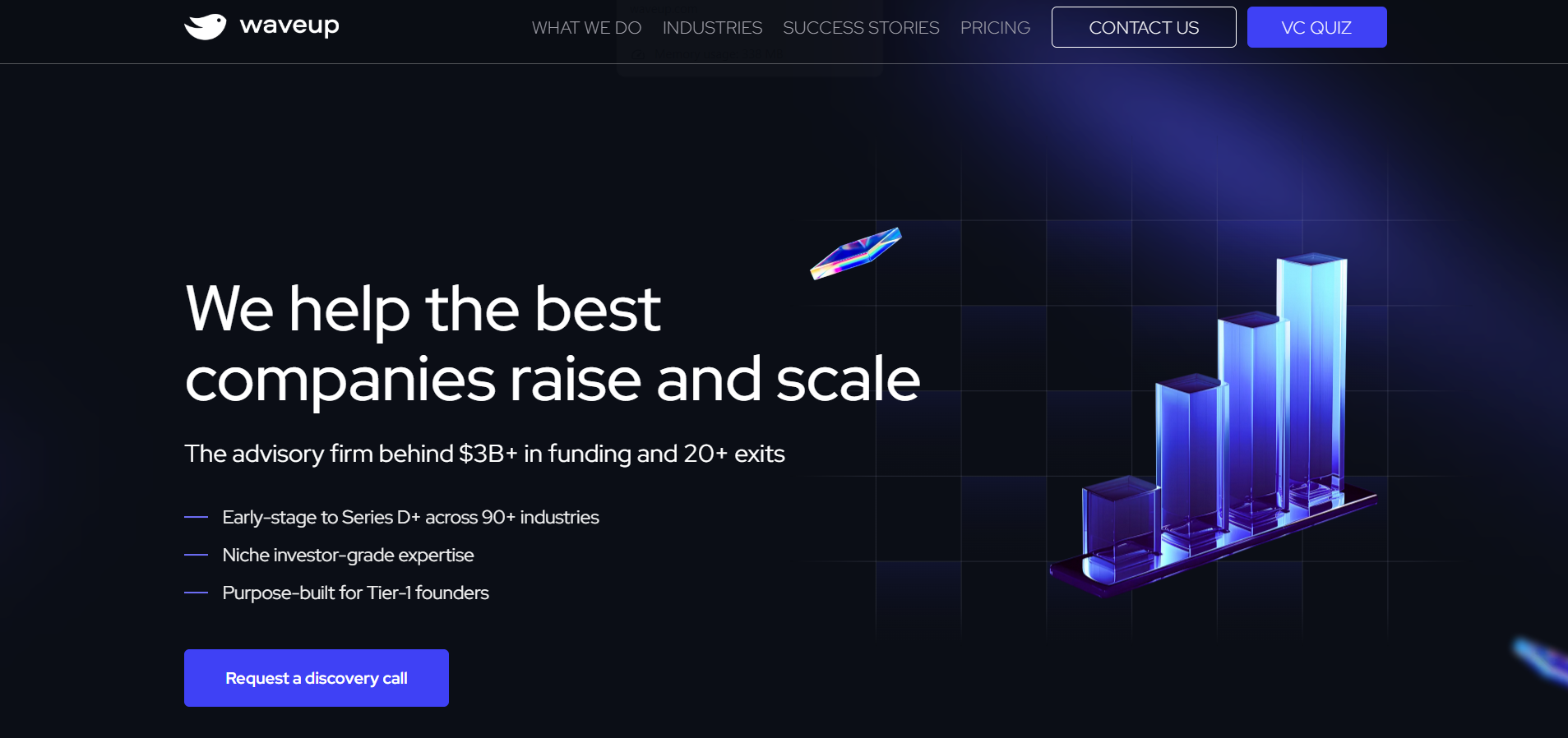
Waveup sits closer to fundraising consultancy than design studio. The team works on narrative, market sizing and financial modelling as much as layout, and publishes $3B raised across 800 projects with 120 partner VC funds.
Pricing splits cleanly. Design only is $100 per slide, so a 15-slide deck is $1,500 if you bring finished content. Full service starts at $5,000 and adds strategic consultation, narrative review, two distinct design concepts, investor-focused data visualisation and editable source files in PowerPoint, Google Slides or Keynote.
Standard turnaround is up to two weeks from kickoff at roughly five slides a day, with urgent delivery available in two business days.
Buy the full-service tier when your problem is the argument rather than the aesthetics: a TAM slide that does not hold up, unit economics that read as optimistic, a traction story buried on slide 14.
Where it loses: $5,000 is a real commitment at pre-seed, and the design-only tier assumes you have already done the hard part yourself.
5. Hype Presentations: best for animation and stage decks
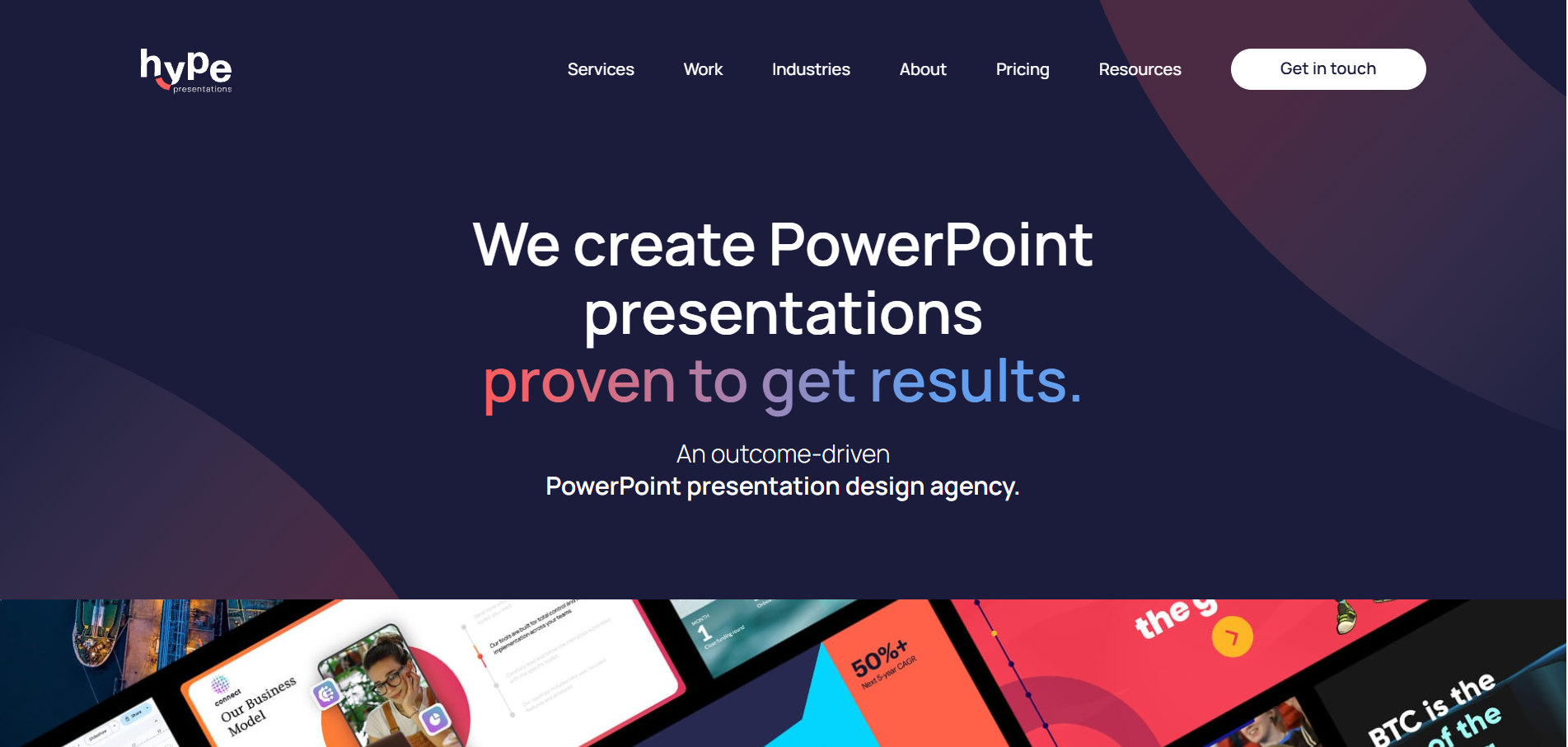
Hype Presentations publishes three tiers in three currencies, which makes it one of the more transparent agencies here, and it runs offices in Manchester and Brooklyn.
Refresh is $2,500 for a design refresh of existing collateral with basic animation. Premium is $4,450 and adds custom design, advanced motion, project management and a revision round per discipline. Ultimate is $11,400 and adds storytelling development, a discovery workshop, custom charts, tailored training and aftercare.
Read the slide counts before the prices. All three tiers cover up to 10 slides. Ten more slides cost £975, and a 20-slide storytelling and content pass is another £975. So a realistic 15 to 20 slide seed deck on the entry tier lands near $3,770 rather than $2,500.
Where Hype earns its money is motion. If the deck will be presented live on a stage or screen-shared in a demo day, the animation work is genuinely better than most of this list.
Where it loses: the 10-slide cap makes the headline price misleading, and the Ultimate tier is priced for corporates rather than founders.
6. Whitepage Studio: clearest slide counts per package
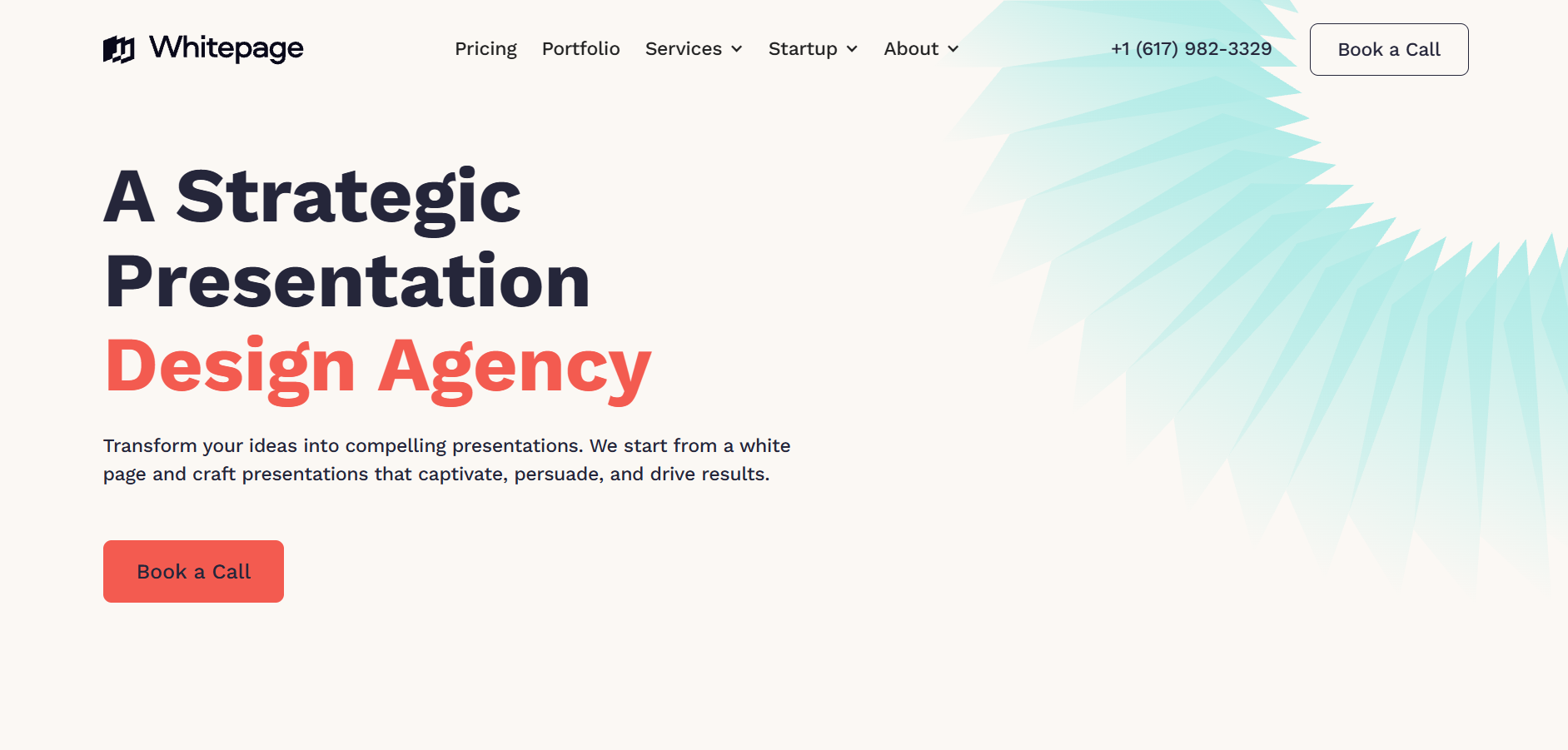
Whitepage Studio structures its offer around slide count, which is the honest way to scope a deck.
Lite covers up to 10 slides with custom design, content proofreading, a discovery call and an editable source file. Basic covers up to 20 and adds deck structure and flow, content refinement, market research, custom charts and infographics, and up to five revisions. Premium covers up to 30 and adds unlimited revisions, financial modelling, narrative development and go-to-market projections.
Prices are quoted rather than listed, but the FAQ states that pitch deck design starts at $3,000, with the final figure depending on complexity, timeline and workload. Typical turnaround is 10 to 14 business days.
For most seed founders the Basic package is the right shape, which puts the real cost somewhere above that $3,000 floor.
Where it loses: you cannot buy without a call, and a stated floor is not a price.
7. SketchDeck: best for the deck plus everything after it
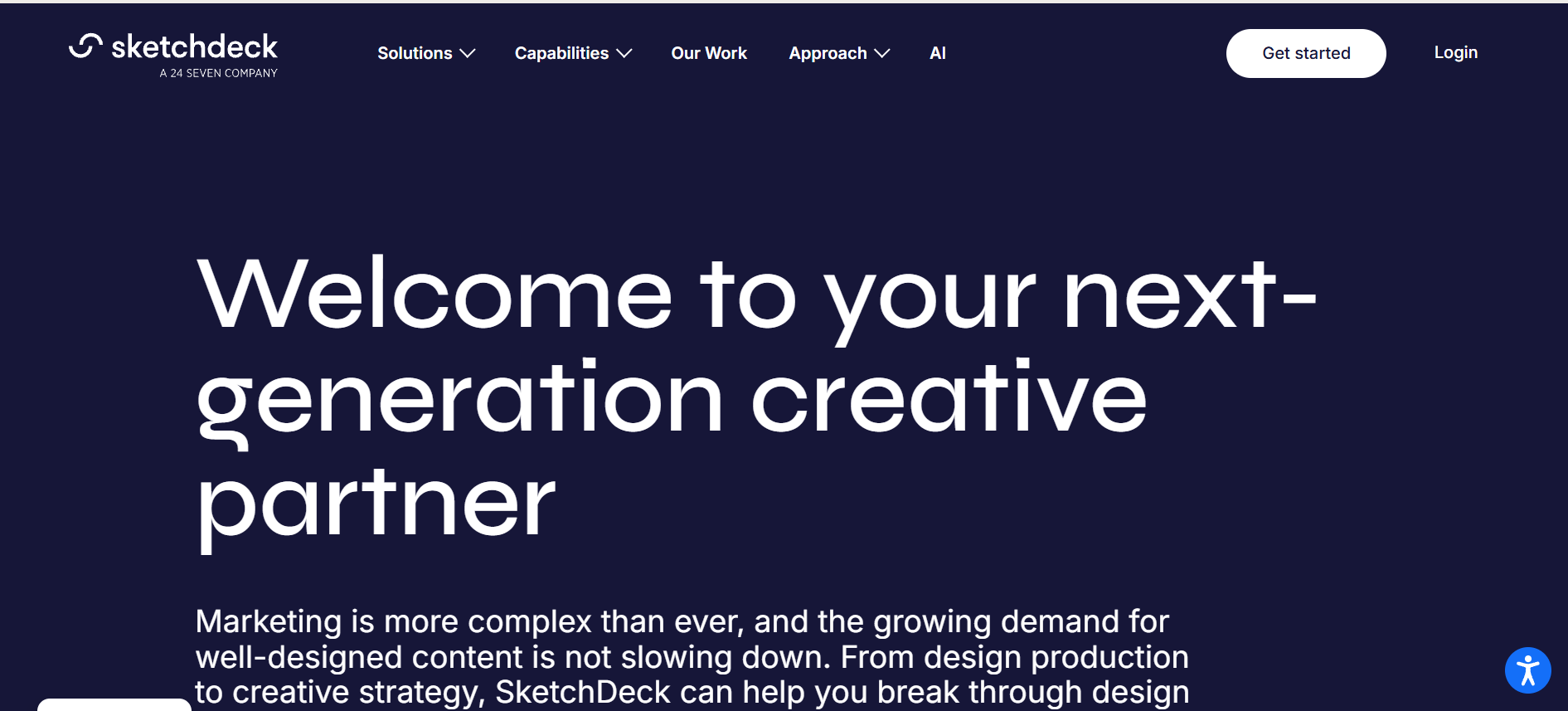
SketchDeck is a design-ops platform rather than a deck boutique, and the distinction matters for how you buy it.
Rates are $125 an hour for production, $187.50 for design and $250 for director level, with a 25-hour minimum on a first project. That minimum is the number other roundups leave out, and it sets the real floor at $3,125, not $125. Standard turnaround is two to four days per iteration.
Above the project tier, membership starts at 75 hours a month and drops production to $110 an hour, with express delivery in 12 to 36 hours at a 50% premium. Unused hours roll over for one month, and 10% to 20% of hours go to strategy and management.
SketchDeck makes sense when the pitch deck is the first of many: the sales deck, the board deck, the QBR template, the conference one-pager. As a single-deck purchase it is expensive for what you get.
Where it loses: the 25-hour minimum, and the fact that hours spent on project management are hours you paid for.
8. Buffalo 7: best for story-first rebuilds
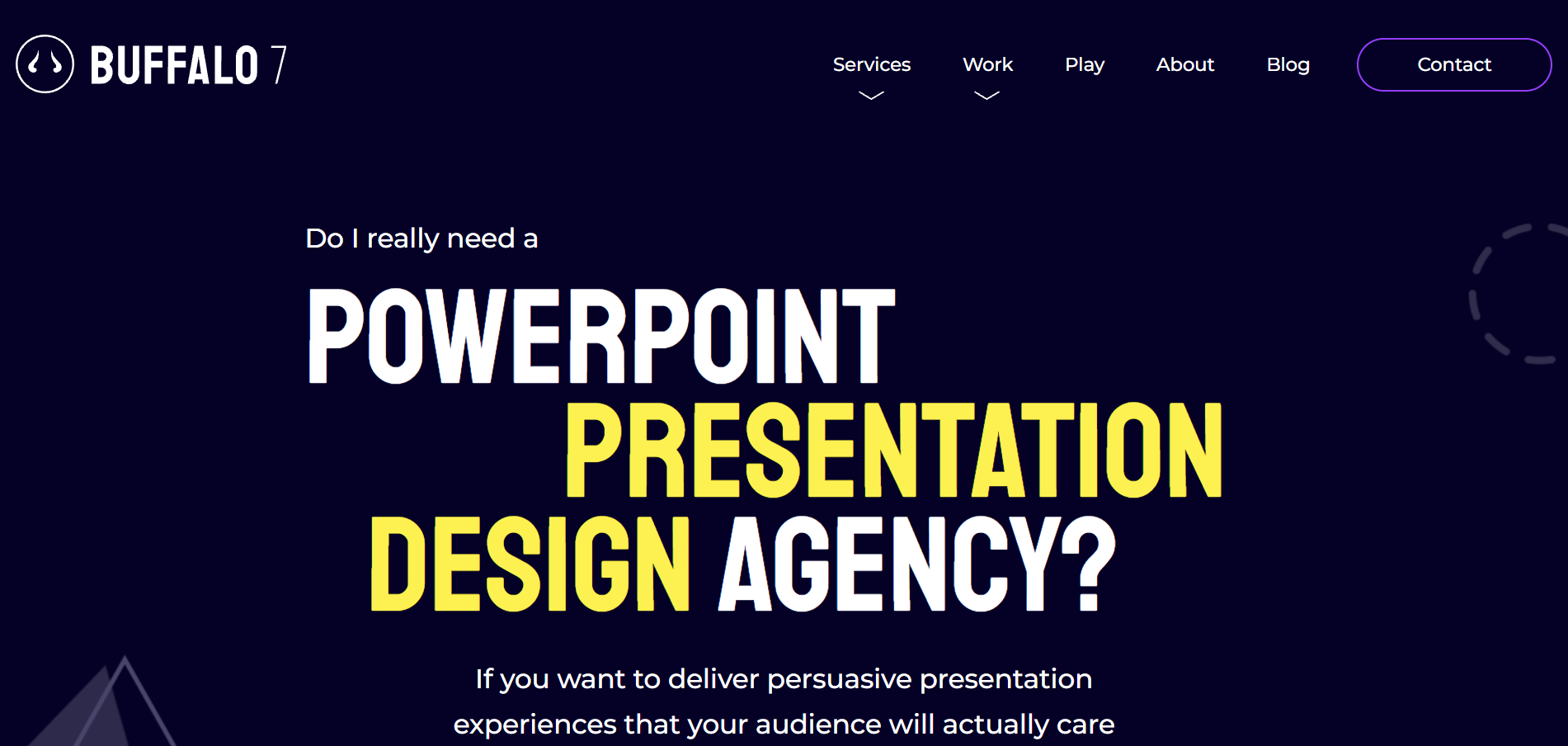
Buffalo 7 is a Manchester and London studio with a straightforward diagnosis: most pitch deck problems are story problems, not design problems. The work covers narrative development, content writing, visual design and animation.
Pricing is quoted, and the team says so plainly rather than dressing it up. Their own FAQ answer is that a lean seed deck needing a visual lift is not the same project as a Series B raise with narrative rewrites, custom illustration and animation. Turnaround runs from a few days for a refresh to a few weeks for a full rebuild.
Worth flagging: Buffalo 7 publishes no prices at all, despite at least one prominent roundup listing three specific tiers for them. If you see figures attributed to Buffalo 7 anywhere, they did not come from Buffalo 7.
Where it loses: no published pricing means no way to qualify yourself in or out before a call, and the UK base can mean time zone friction for West Coast founders.
9. 24Slides: best for the night before the meeting
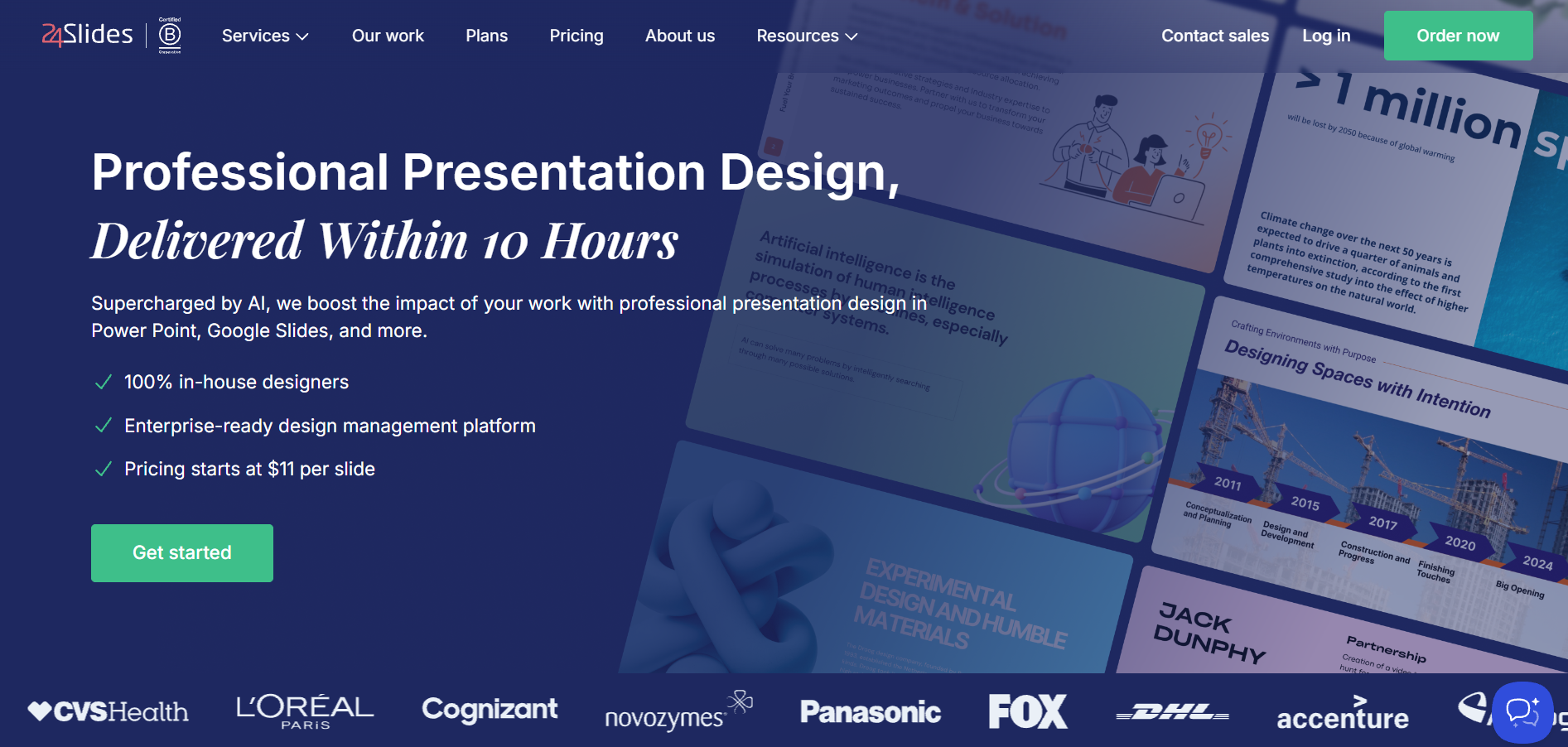
24Slides is the fastest option here and the only one priced so you can buy exactly what you need.
Work is priced per slide on three service levels. Fix Up is $16 a slide, Redesign is $43, and Redraw is $66. Turnaround options are 24, 48 or 72 hours with no subscription required, so a 15-slide redesign is $645 delivered tomorrow. A $99 a month Pro plan drops those rates to $14, $39 and $59 and unlocks 10-hour turnaround.
This is triage pricing, and triage has its place. An investor moves a meeting up by a week, your deck is structurally fine but looks like it was built in a hurry, and you need it presentable by morning. Nothing else in this list can do that.
Where it loses: there is no strategy layer. 24Slides will make your slides look professional. It will not tell you that slide 6 is making the wrong argument.
10. Cayenne Consulting: best when the deck follows a business plan
Cayenne Consulting approaches the deck as an output of business planning rather than a design project. The process builds a generic deck first, then customises it for specific audiences, whether that is an angel meeting, a VC pitch or a competition.
The team works to a 10 to 15 slide standard and covers strategy, design and refinement. Pricing is by fee estimate after a needs assessment, with no published rates. Industry roundups commonly cite a starting point around $6,500, which is consistent with the consulting-led positioning but is not a figure Cayenne publishes.
Pick Cayenne when the deck is one deliverable inside a larger fundraising or business planning engagement, and when the financial model needs building rather than just visualising.
Where it loses: the most expensive way to buy design in this list, and overkill if your plan and model are already sound.
The slide cap nobody advertises
Headline prices in this category are quoted against slide counts that are smaller than the deck you are about to build. Sequoia's own template runs 10 slides, but a real seed deck with an appendix lands at 15 to 20 more often than not.
Two things fall out of that table. Slidebean's $799 looks cheap at 10 slides and looks remarkable at 20. And the gap between Hype's advertised $2,500 and its realistic $3,770 is larger than the entire cost of a Slidebean deck.
Ask every provider the same question before you sign: how many slides does this price cover, and what does slide 21 cost.
How to choose, by stage
Pre-seed, raising under $1M. Your deck will change more in the next eight weeks than at any other point. Buy cheap and fast, and buy twice if you have to. Slidebean at $799 or 24Slides at $43 a slide are the right instruments. Do not spend $5,000 on a narrative you have not pressure-tested with investors yet.
Seed, raising $1M to $5M. This is where full-service pays for itself. You have traction data worth visualising properly and a story worth getting right. Pitch Deck Fire at $3,999 or Waveup's $5,000 full-service tier are the sweet spot. If the story is solid and only the design is weak, Whitepage or Hype will do.
Series A and beyond, or raising alongside a rebrand. You are producing a deck, a data room, an updated site and sales collateral at once, and consistency across all of them matters more than any single artefact. That is a capacity problem, not a project problem, and it is where a subscription or SketchDeck's membership tier beats buying five separate projects.
Any stage, if the content is not written. Fix that first. Every service in this list produces better work from a rough but complete narrative than from a brief that says "make it look investor-ready". Our guide to building an investor pitch deck covers the structure, and the presentation colour palettes piece covers the visual system once the story is settled.
When a subscription beats a one-off deck
The honest dividing line is volume, and it is easy to calculate.
Count everything visual your raise needs over the next 90 days. If the answer is "the deck", buy the deck. A flat fee from a specialist will beat a subscription on both price and depth of fundraising expertise.
If the answer is the deck plus six or eight other things, the arithmetic flips. One $3,999 project plus separate quotes for a one-pager, a data room cover, LinkedIn announcement graphics and a refreshed website hero will clear $6,000 quickly. Three months of a $699 subscription is $2,097 with revisions included.
The revision point does most of the work here. Decks do not get designed once. They get designed, shown to five investors, and rebuilt around whatever those five people got stuck on. Project pricing bills that as new scope. Subscription pricing does not.
If your needs run broader than fundraising, our comparison of presentation design agencies covers 15 options across subscriptions and agencies, and presentation design services for startups looks specifically at the full startup presentation stack rather than the investor deck alone.
{{PRESENTAION_BANNER="/dev/components"}}
Frequently asked questions
Bottom line
Pick on pricing model before you pick on brand.
If you need one deck and the story is already sound, Slidebean at $799 for 20 slides in four business days is the best value in the category, and nothing here beats it on price per finished slide. If the story needs work, Waveup or Buffalo 7 are worth the step up to $4,000 or $5,000. If you need it tomorrow, 24Slides.
And if the deck is one item on a fundraising asset list that runs to a dozen, stop pricing the deck. Price the quarter. Explore ManyPixels plans to see what $699 a month covers, or look at our presentation design service for what the output looks like.
Whatever you buy, ask the slide count question first. It is the difference between the price on the page and the price on the invoice.
All pricing verified against providers' own live pricing pages in September 2026. Prices in this category change frequently, and quoted-only agencies may vary by scope.

Having lived and studied in London and Berlin, I'm back in native Serbia, working remotely and writing short stories and plays in my free time. With previous experience in the nonprofit sector, I'm currently writing about the universal language of good graphic design. I make mix CDs and my playlists are almost exclusively 1960s.

Top-quality designers
A complete creative team at your fingertips: graphic and web designers, illustrators, and more.

Lightning-fast turnaround
Get start today and receive your first update on the next business day.

All-inclusive pricing
Unlimited requests and revisions. One flat monthly fee. No surprises.

Flexible & scalable model
No contract. Scale up and down as needed. Pause or cancel at anytime.
Continue reading

.jpeg)
.jpeg)
Explore some of our best designs
Get inspired by a curated selection of ManyPixels work. Download the portfolio to see what our team can create.