
10 best UI/UX design services in 2026
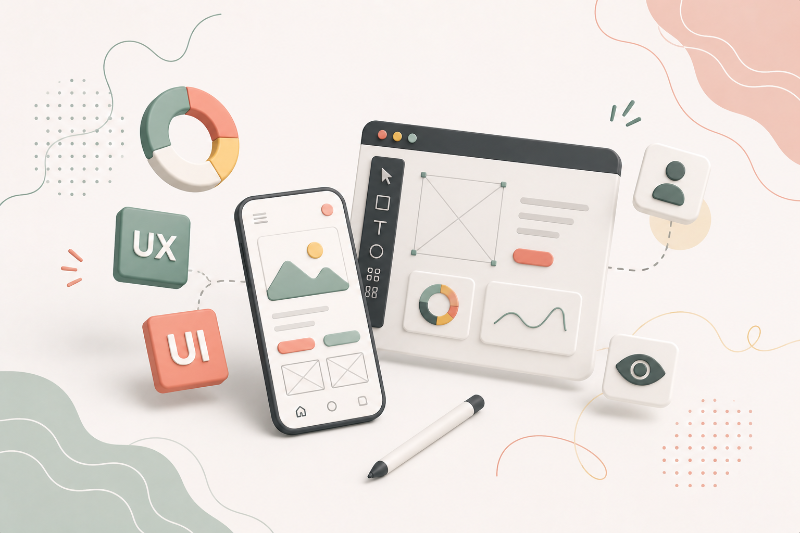
TABLE OF CONTENTS

TL;DR
The best UI/UX design service depends on whether you are buying research or execution. If you already know what to build, a design subscription like ManyPixels (~$699/month) delivers screens, flows and design systems for a fraction of studio rates. If the product question is still open, a research-led studio like Eleken ($4,599/month) or Lazarev.agency (six figures) earns the premium. Everything else on this list sits between those two poles.
Most buyers are paying for research they will never use
Search "UI/UX design services" and the roundups fill up with studios quoting minimum project budgets of $25,000 and $50,000. Look at what those budgets actually buy and roughly half of the engagement is discovery: stakeholder interviews, user research, personas, journey maps, a synthesis deck.
Sometimes that work is the whole point. If you do not yet know who the user is or what the product should do, skipping discovery just means guessing expensively later.
Most teams shopping for UI/UX design services already know what they are building. They have a roadmap, a spec, and often a v1 in production. What they need is somebody to design 40 screens, build a component library, and keep both current as the product ships. That is execution work, and it costs about a tenth of what a discovery-led studio charges.
What are UI/UX design services?
UI/UX design services are outsourced product design: a team or individual designs the interface and user flows for an app, website or SaaS product. Deliverables typically include user flows, wireframes, high-fidelity screens in Figma, interactive prototypes and a reusable design system. Some providers add user research and usability testing; many do not.
The label bundles two distinct disciplines. UX covers how the product works: information architecture, flows, what happens when a form fails validation. UI covers how it looks and feels: layout, typography, color, spacing, states, components.
Almost every provider sells both under one name. The useful question is not whether a service "does UI/UX" but how much of each you are paying for, and whether the split matches what you actually need.
UX research vs UI execution: which one are you buying?
Here is the test we use. Can you name, in one sentence, the screen a user lands on and the action you want them to take next? If yes, you need execution. If you find yourself saying "well, it depends who the user is," you need research first.
Buy discovery when the product question is open. Pre-product-market-fit startups, a category nobody has built for before, a workflow tool for an industry you do not personally work in, an existing product with unexplained drop-off. In those cases, research is the deliverable and the screens are a byproduct.
Buy execution when the product question is closed. A funded roadmap, a design debt backlog, a rebrand that has to propagate across 60 screens, a marketing team that ships new flows monthly. Here, a discovery phase is a $15,000 tax on work you have already scoped.
💡 Worth knowing: the two are not permanently exclusive. A common pattern is one discovery sprint with a studio to settle the direction, then a subscription or in-house designer to execute against it for the next two years.
One more distinction that trips people up. Product interface work is not the same purchase as brand identity work. If what you actually need is a logo, brand guidelines and a pitch deck, our guide to finding a design agency for startups covers that market instead. This article is about interfaces.
Prices are approximate and move often. Check each provider's site before you commit, and see current ManyPixels pricing for the latest tiers.
Tier one: subscriptions and marketplaces you can actually buy
1. ManyPixels: unlimited interface design on a flat monthly fee
{{WEBSITES_PORTFOLIO="/dev/components"}}
Starting price: approx. $699/month (Advanced)
Model: unlimited design subscription
Turnaround: first drafts in 24 to 48 hours
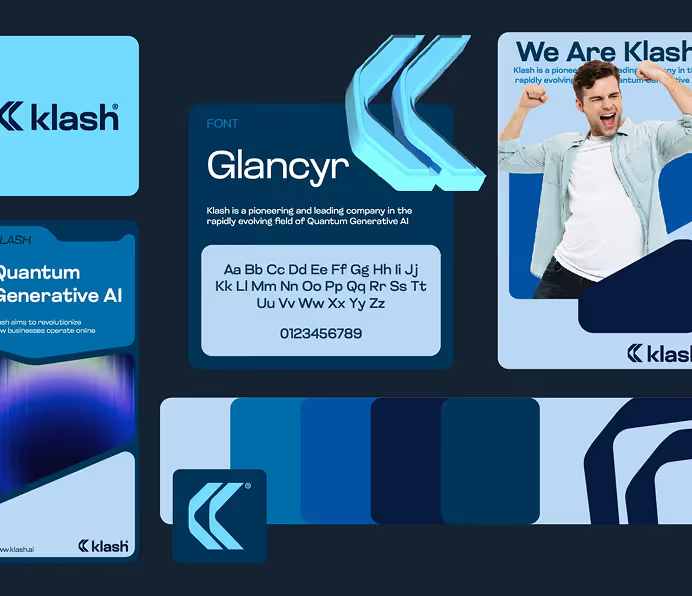
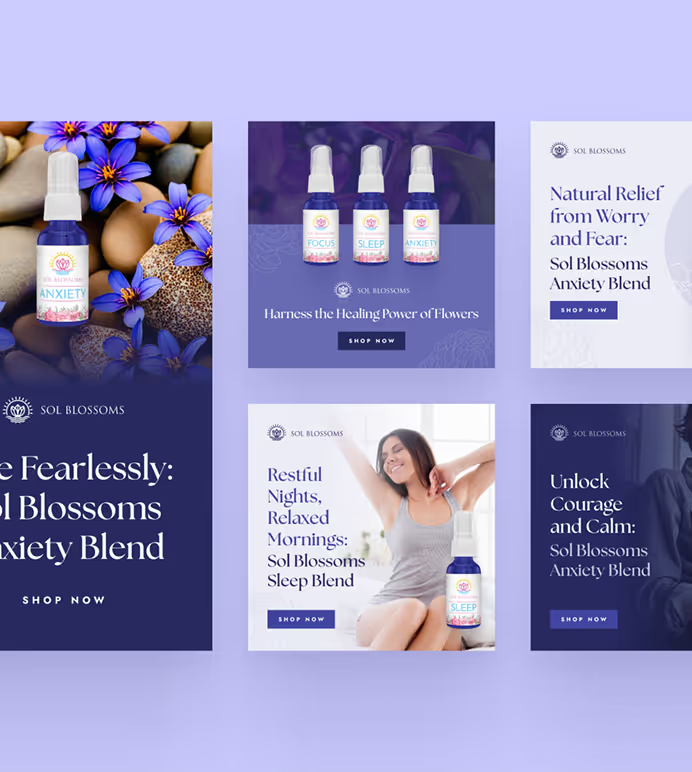
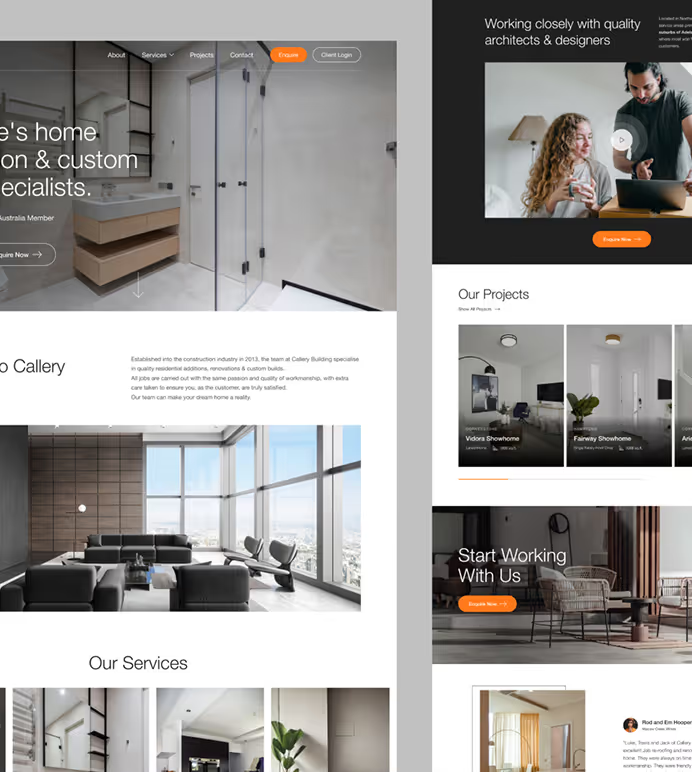
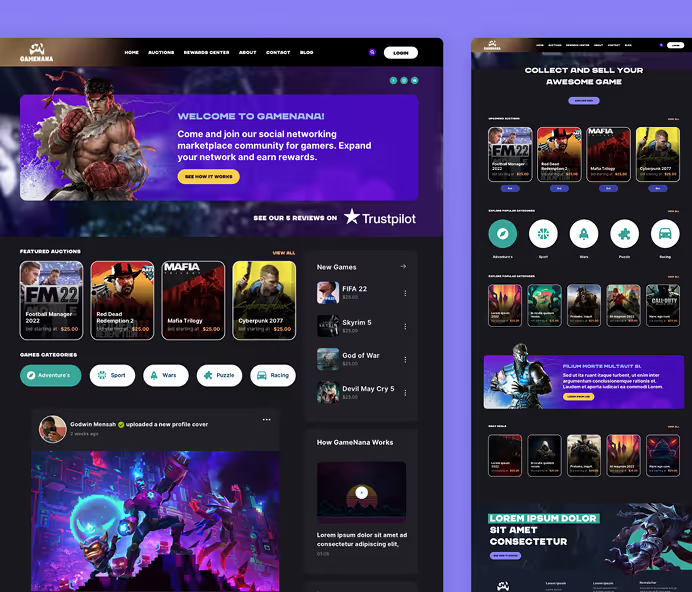
ManyPixels is a flat-fee design subscription covering web and UI design, including app interfaces, wireframes, prototypes and design systems. You submit a request, a designer works your queue, and a first draft comes back inside 24 to 48 hours with unlimited revisions until it is right. Screen number forty costs the same as screen number one.
The mechanism is daily output. We deliver a finished piece of work every business day rather than everything at once, so a screen set builds up across days with visible progress instead of arriving in one silent drop three weeks later. For interface work that pattern helps, because component decisions made on day two get corrected on day three rather than propagating through the whole file.
The honest limit: ManyPixels executes interfaces. We do not run moderated usability tests or user interviews, and we do not write your product strategy. If the reason you are shopping is that nobody knows what the product should do, a studio further down this list is the better call. If you know what to build and need it built well and continuously, this is the cheapest credible way to do it. 72% of our customers pick the Assigned Designer or Design Team plans, which suggests most buyers want one consistent designer rather than an anonymous pool.
Best for: teams shipping interface work continuously alongside other design ✅
Not ideal for: a product that needs user research before anyone opens Figma ❌
2. Design Shifu: the cheapest plan that genuinely includes UI
Starting price: $549/month (Starter)
Model: design subscription
Turnaround: next business day
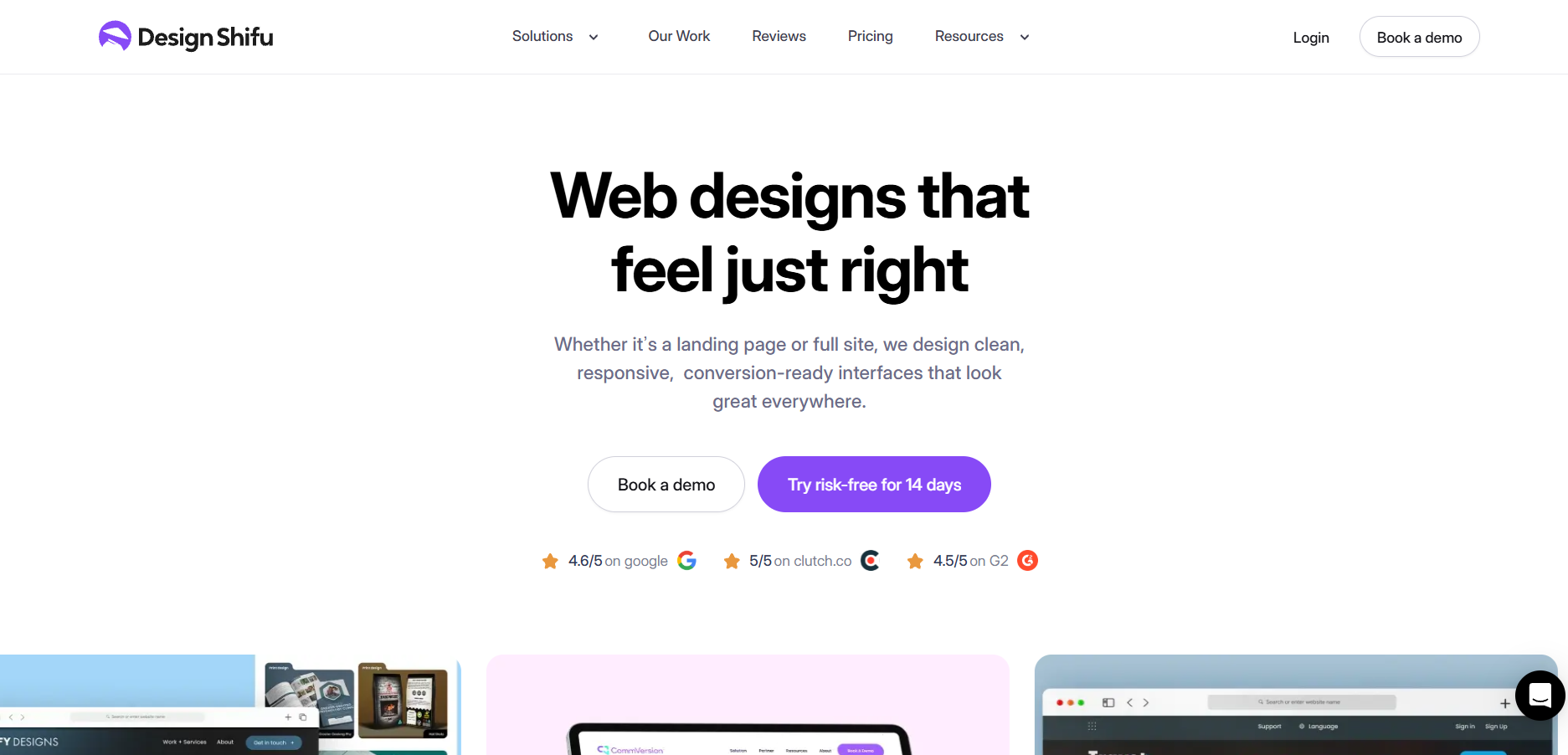
Design Shifu is the lowest entry price in this category that does not gate interface work behind an upgrade. Website and UI/UX design sit on all three tiers, along with Webflow and Framer development, which is unusual at $549. Annual billing drops Starter to $458/month, and there is a 14-day money-back guarantee.
The catch is depth rather than scope. At this price you are getting competent screen production, not a designer who will argue with your product manager about an empty state. Worth checking before you commit: motion design is included on the monthly plans but still marked "coming soon" on the discounted annual ones, so the cheaper billing option costs you prototype animation and micro-interactions.
Best for: small teams needing interface and web design on the tightest real budget ✅
Not ideal for: products where motion and interaction design carry weight ❌
3. Renlar: the only subscription that names design systems in its plan
Starting price: $1,395/month (Websites & Development)
Model: design subscription with development
Turnaround: request-based, one active at a time
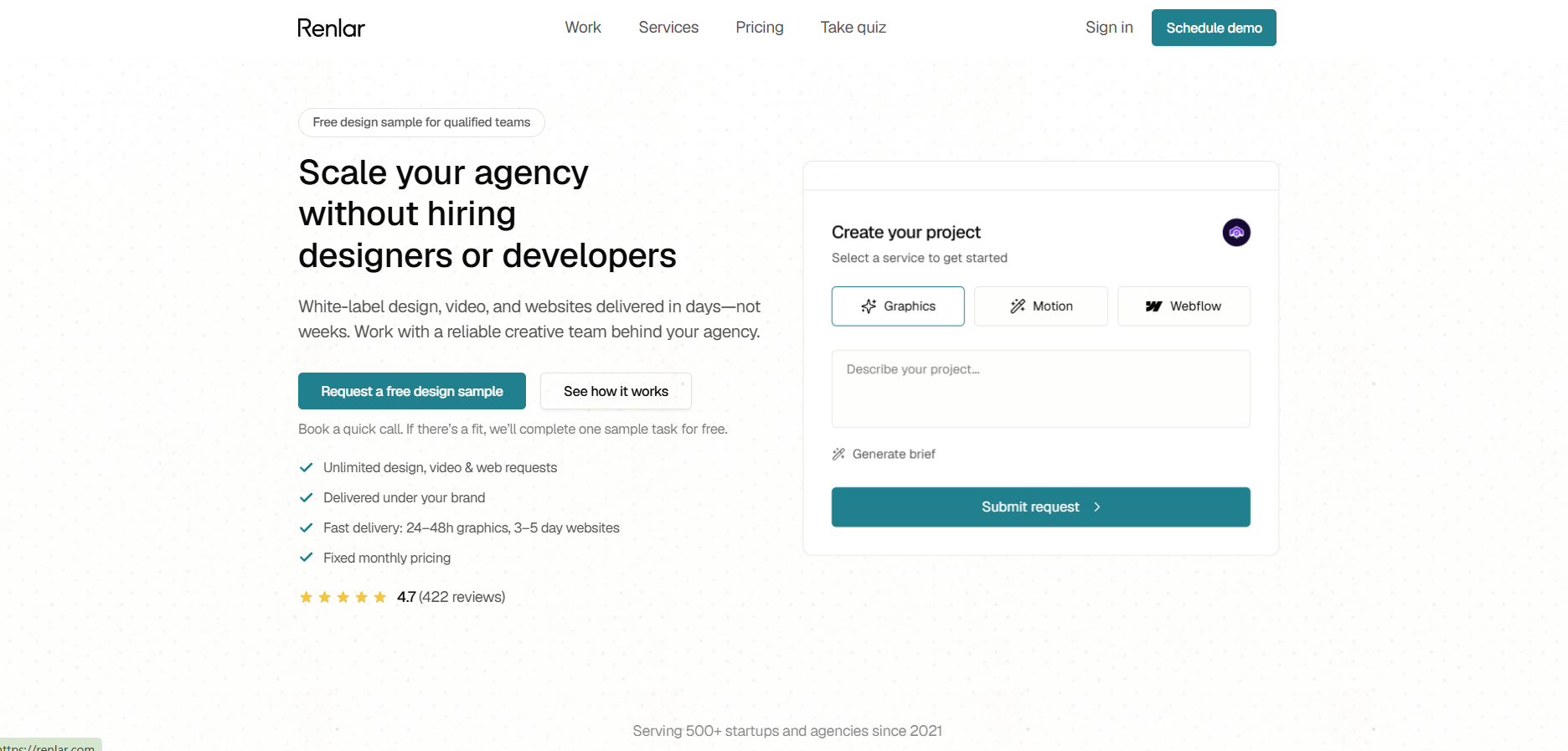
Renlar, which rebranded from Reel Unlimited in late 2025, is the rare subscription that spells out "app design and design systems" as plan scope rather than burying it under "web design". The Websites & Development tier also includes Webflow, Framer and WordPress build, so design and implementation come from one contract. A white-label portal makes it workable for agencies.
Watch the throughput. That tier runs one active request at a time, so a design system build and a new screen set queue behind each other rather than running in parallel. The $1,995 Bundle raises that to three. Almost every roundup online still lists this service as "Reel Unlimited, $795", which has not been true since the rebrand.
Best for: teams wanting interface design plus responsive build in one place ✅
Not ideal for: parallel workstreams on the entry tier ❌
4. Awesomic: matched part-time talent, with UI gated to the upper tier
Starting price: $2,995/month (All-in-One)
Model: matched part-time designer
Turnaround: next business day
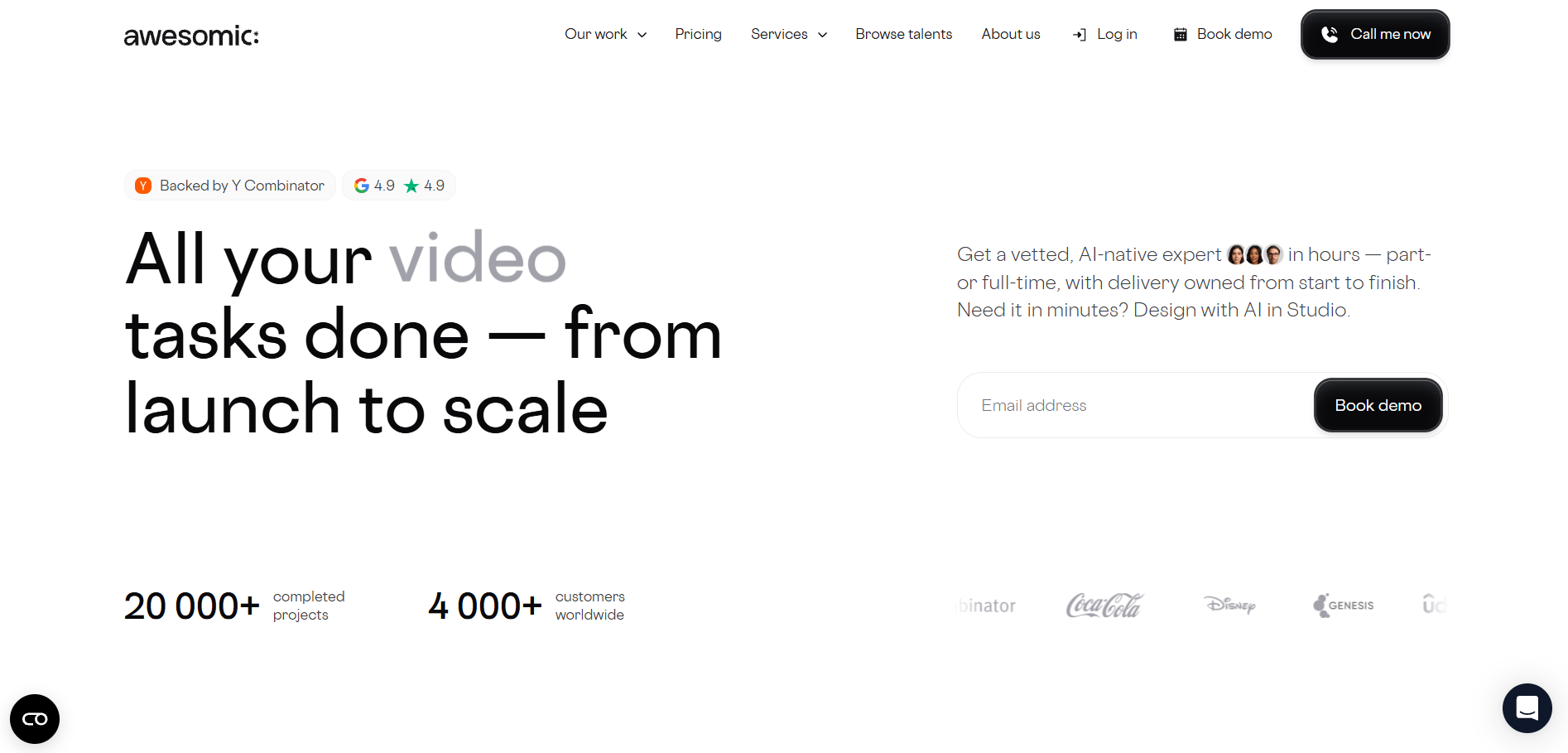
Awesomic matches you with a specific designer rather than a queue, and will rematch you free if the fit is wrong. That rematching promise is genuinely useful, because designer fit is the variable most subscriptions ask you to accept on faith.
Here is the part their pricing page makes you work for: UI/UX design is not included in the $1,490 Graphic Pack. It sits on All-in-One at $2,995/month, or on the custom Dedicated Talent plan. Every third-party roundup that lists Awesomic at $1,490 as a UI/UX option is quoting a plan that cannot do the job. The quarterly discount to $2,396 also locks you in for three months.
Best for: teams who want one named designer and will pay for the fit guarantee ✅
Not ideal for: anyone budgeting from the advertised entry price ❌
5. Toptal: senior contractors without the hiring cycle
Starting price: quote, hourly or retainer
Model: vetted freelance network
Turnaround: matched in roughly 24 hours
Toptal screens hard, claiming under 3% of roughly 200,000 annual applicants are accepted, and it will match you to a product designer in about a day. A trial of up to two weeks with no billing if you are unsatisfied removes most of the risk from a bad match, and their reported 98% trial-to-hire rate suggests the screening does something.
You are still hiring a contractor, with everything that implies. Rates land well above marketplace averages, you manage the person directly, and when they roll off, their context goes with them unless you have insisted on documentation. For a defined three-month push, that is fine. For continuous work, compare the annualized cost against a subscription before you sign.
Best for: a defined project needing one senior product designer ✅
Not ideal for: teams with no capacity to manage a contractor ❌
6. Upwork: the price floor, with the variance that implies
Starting price: $25 to $39/hour
Model: open marketplace
Turnaround: varies entirely by hire
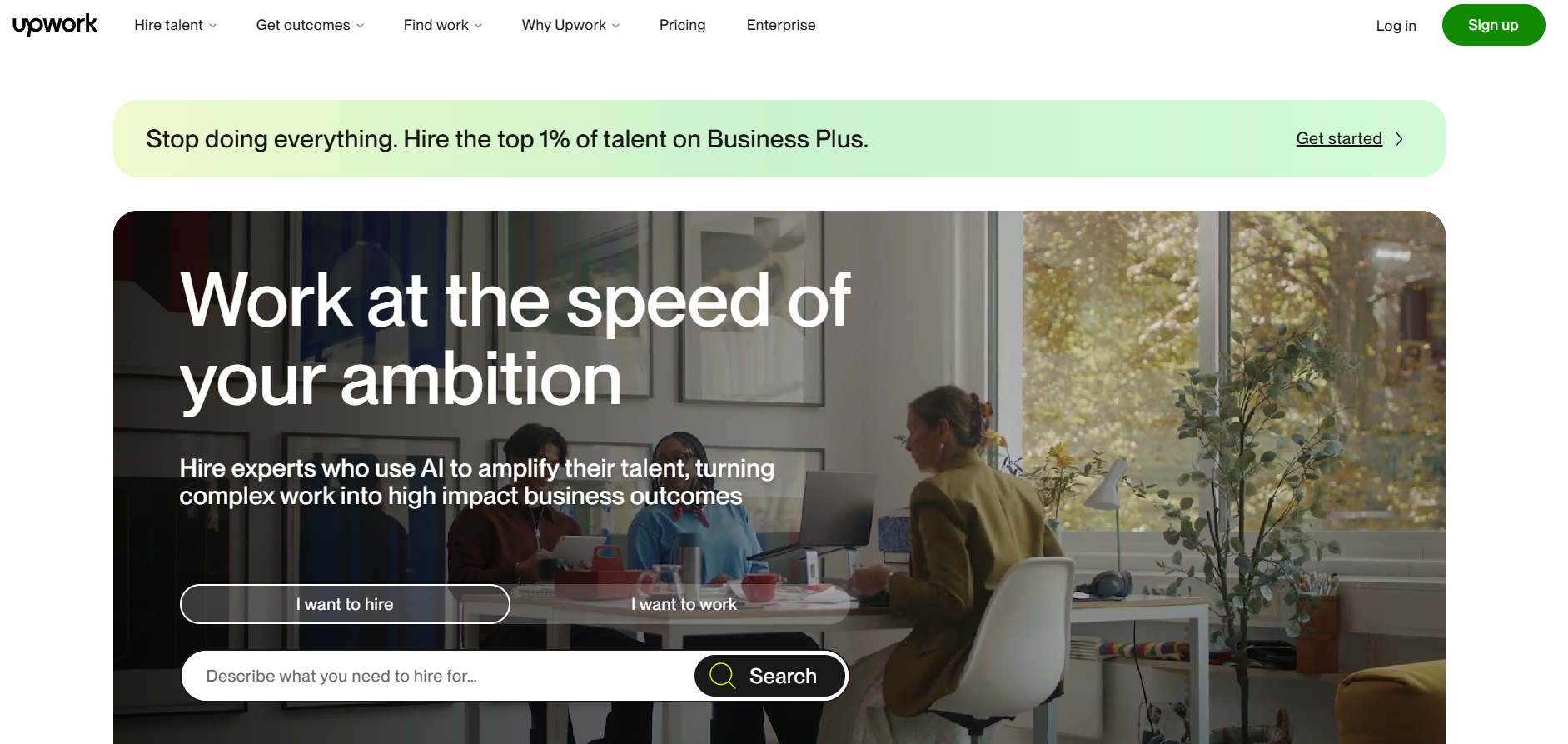
Upwork publishes its own numbers, and they set the floor for this whole market: UX designers on the platform charge between $25 and $39 an hour, with a median of $27. For a scoped job with a clear brief, a settings page redesign, an onboarding flow, a Figma cleanup, that is hard to beat on cost.
The variance is the trade. You are vetting, briefing, and quality-controlling yourself, and the median rate reflects a global pool where portfolio quality ranges enormously. Teams that do well here usually run a small paid test before committing to anything larger.
Best for: tightly scoped one-off jobs where you can judge the work yourself ✅
Not ideal for: ongoing work needing consistency across many screens ❌
Tier two: research-led product studios
These four are a different purchase, not a more expensive version of the same one. You are buying a team that will tell you what to build before designing it. Prices start where tier one ends, and for the right problem they are worth it.
7. Eleken: SaaS-only, and the only studio publishing rates
Starting price: $4,599/month (part-time designer)
Model: dedicated designer with design lead oversight
Turnaround: continuous, task-based
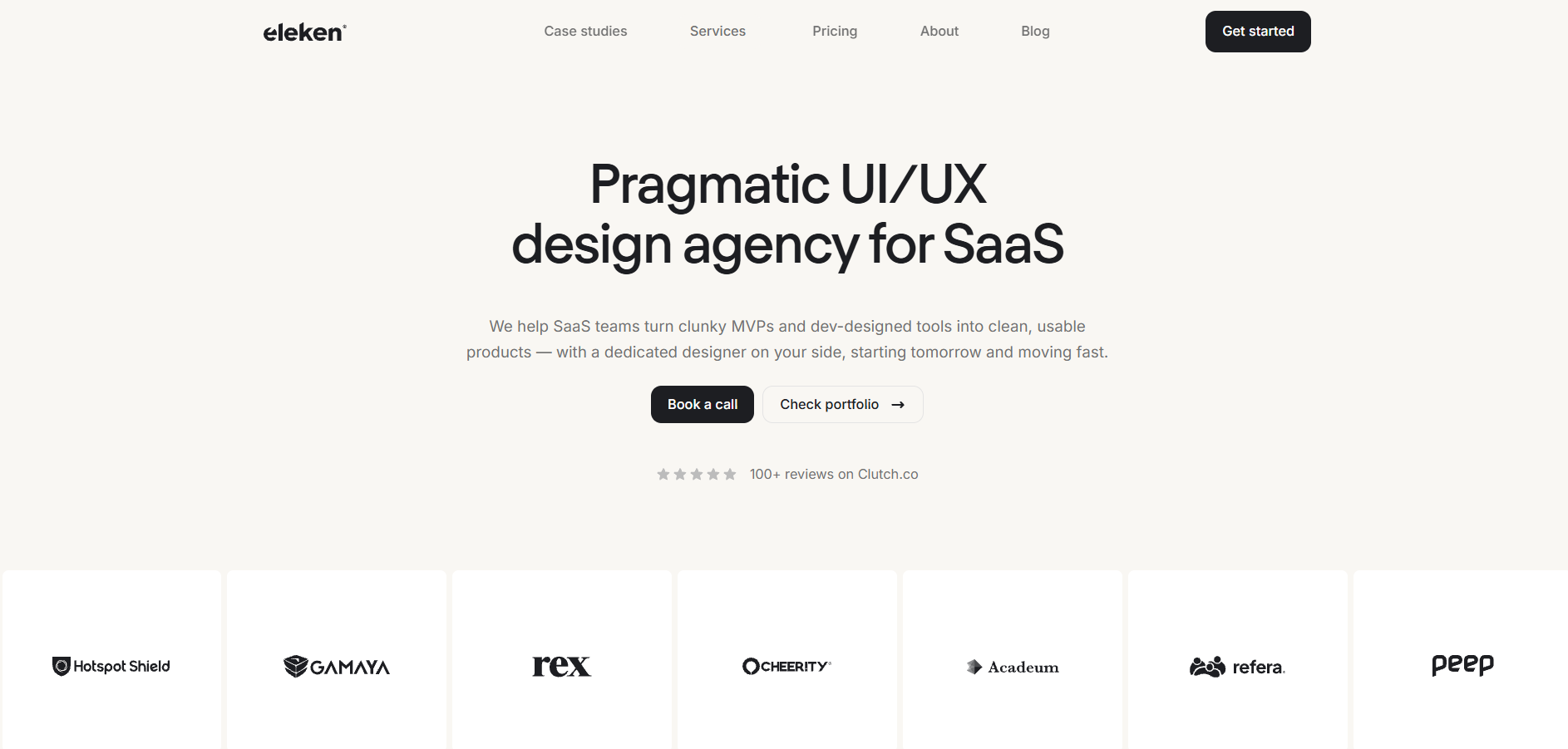
Eleken works on SaaS products and nothing else, and is blunt about it: their site tells non-SaaS companies not to apply. You get a dedicated designer plus guidance from a Head of Design, unlimited tasks and revisions, and a three-day trial. Pricing is published rather than quoted, which is rarer in this tier than it should be.
The commitment is real: a two-month minimum contract and a month's notice to cancel, so the true cost of a trial is closer to $9,200 than $4,599. Full-time runs $6,599 and two full-time designers $11,999. If your product is not SaaS, this specialization works against you.
Best for: funded SaaS companies wanting product thinking alongside design ✅
Not ideal for: non-SaaS products, or anyone needing a month-to-month exit ❌
8. Cieden: buy research in pieces instead of one big engagement
Starting price: $2,000 for a UX audit, $50/hour project-based
Model: fixed-price microservices, hourly, or team extension
Turnaround: sprint-based
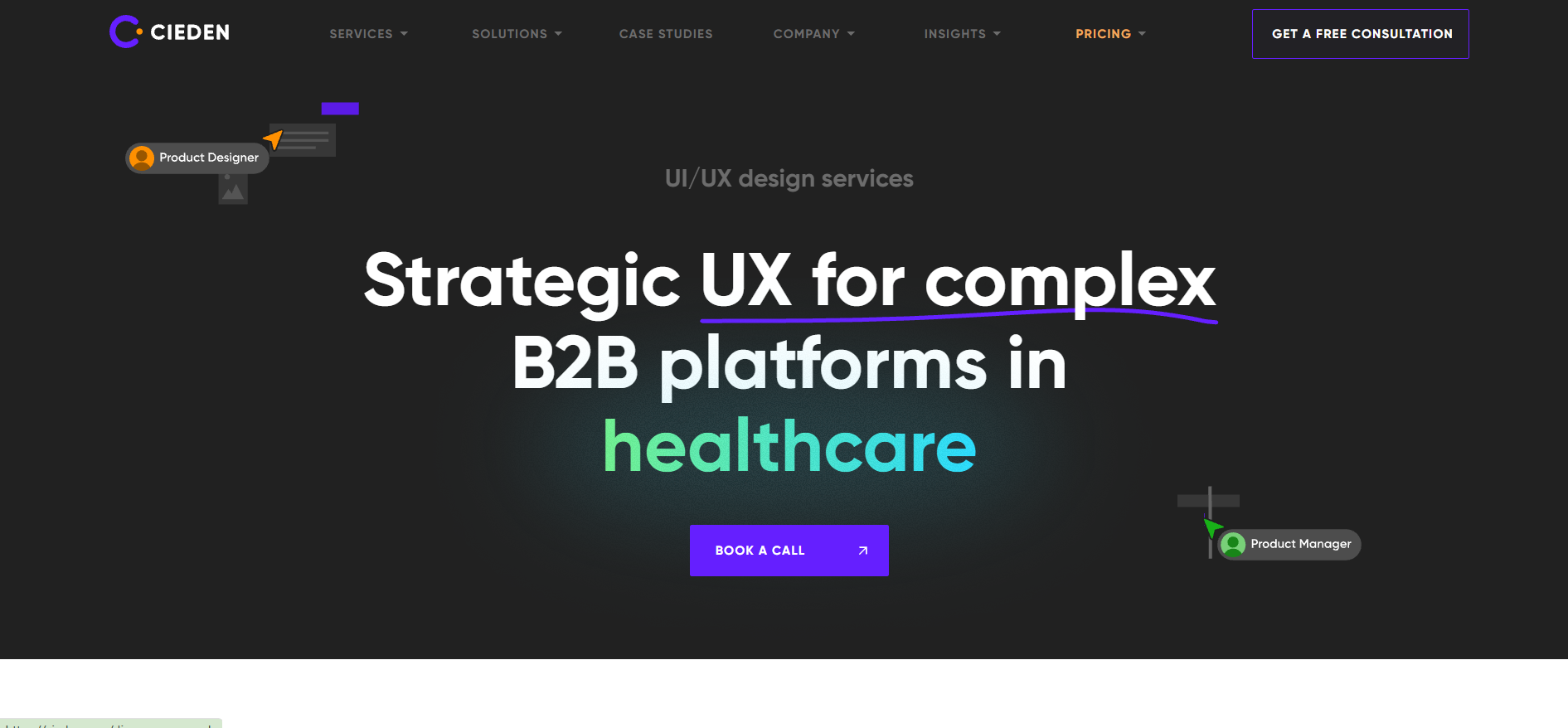
Cieden runs an explicit six-stage process from strategy through discovery, analysis, design, production and ongoing support. What makes it unusual is that they sell pieces of it separately at fixed prices: a UX audit from $2,000, scope definition from $3,500, product discovery from $6,500, a design sprint from $7,000. You can buy the research, read it, and then decide whether to buy the design at all.
Longer engagements price differently. Project-based work starts at $50 an hour, or $80 with US and Canada designers, and team extension runs from $7,200 a month per person. Remote-first with offices in Toronto, Wilmington and Lviv. We have not run a project with them, so we cannot speak to how the sprints land in practice.
Best for: teams wanting a research answer without committing to a full build ✅
Not ideal for: anyone needing continuous design output rather than a deliverable ❌
9. Clay: enterprise product redesign with brand attached
Starting price: quote only
Model: time and materials, fixed fee, or retainer
Turnaround: project-based
Clay works with Meta, Google, Stripe, Coinbase, Uber and Slack, and the portfolio backs the client list up. Where they are genuinely differentiated is combining enterprise software redesign with brand and content in one engagement, which is hard to assemble from separate vendors without seams showing.
That client list is also the warning. This is a San Francisco studio with offices in six cities, and the engagement models are built for companies with procurement departments. If you are a seed-stage startup, you will be the smallest account in the room, and priced accordingly.
Best for: established companies redesigning complex software ✅
Not ideal for: early-stage teams or anything under a six-figure budget ❌
10. Lazarev.agency: the six-figure end of the market
Starting price: $100,000+ minimum project size, $100 to $149/hour
Model: full-service product design studio
Turnaround: multi-month engagements
Lazarev.agency works on complex tools where clarity is the hard problem: dashboards, fintech, and products where the interface effectively is the product. For those, deep research genuinely changes the outcome, and their published case studies show the reasoning rather than just the final screens.
Set your expectations from their Clutch profile rather than their homepage, which names no minimum. Clutch lists a minimum project size of $100,000 and rates of $100 to $149 an hour, though the verified reviews on that same profile cluster in the $10,000 to $49,999 band, so the stated minimum is likely softer than it reads. The question at that level is not whether they are good. It is whether your product's design risk is worth six figures to remove. If a wrong interface decision costs you a year of engineering, it is. If you need a marketing site and an onboarding flow, it is not.
Best for: funded companies where interface quality is the competitive moat ✅
Not ideal for: anything you could brief in a paragraph ❌
Why no enterprise design partners are listed as entries
You will notice Superside is absent from the list. That is deliberate. Superside starts around $15,000 a month on a 12-month contract, which makes it a serious option for enterprise creative teams and an impossible one for anyone comparing $549 plans. Listing it beside Design Shifu would imply they are alternatives to each other. They are not.
The same logic keeps most of the studios that dominate this search out of the main list. By the minimum budgets compiled in Lazarev's own roundup, Goji Labs, Neuron, Momentum Design Lab and Rossul all sit at $25,000 and up, and Simple Thread at $50,000. They are real, capable firms. They are just not a decision most readers of this article are in a position to make.
How much do UI/UX design services cost in 2026?
UI/UX design costs a median of $27 an hour on open marketplaces, $110 to $270 an hour through agencies, $549 to $3,000 a month for design subscriptions, and $25,000 to $100,000 as a minimum project budget at research-led studios. The range is wide because the label covers everything from producing a screen to deciding what the screen should be.
Those figures come from three places: Upwork's own rate data for the marketplace floor, Digital Agency Network's agency roundup for the hourly band, and the studios' published rates and Clutch minimums for the top end.
The number that actually decides things is cost per delivered screen, not cost per month. A $4,599 studio retainer producing 12 finished screens costs $383 a screen. A $699 subscription producing 20 costs $35. Both can be the right answer, because the studio number includes decisions the subscription number does not. Our breakdown of what design actually costs works through the math in more detail.
Do design subscriptions work for app and SaaS interfaces?
Yes, for execution-heavy work. A subscription suits interface design better than most people expect, because interfaces need constant small changes rather than occasional big ones, and a flat fee makes the twentieth revision cost nothing. Design systems, screen sets and responsive variants all fit the model well.
Where subscriptions struggle is anything requiring the designer to make product decisions on your behalf. A subscription designer will build the empty state you describe. A product studio will tell you the empty state is the wrong solution to the problem.
Two practical notes from processing design requests at volume. Briefs that include a link to the live product get better first drafts than briefs that describe it, every time. And teams that ask for the design system first, before the screens, spend far less on revisions later. Our guide to design subscription services covers how the model works across other design types.
How to choose a UI/UX design service
Match the model to your problem, then to your budget. In that order.
If you know what to build and ship interface work monthly, a design subscription gives you the most output per dollar. 👉 Start with ManyPixels or Design Shifu.
If you need app design plus the build, Renlar covers both under one contract.
If you want one named designer and a fit guarantee, Awesomic's All-in-One tier at $2,995 is the honest entry point.
If you have a defined three-month project, hire through Toptal and treat it as a contractor engagement.
If the product question is genuinely open, buy a $2,000 UX audit from Cieden or a retainer from Eleken before you buy screens.
If interface quality is your competitive advantage and you are funded, Clay or Lazarev.agency are worth their minimums.
👉 If your immediate need is conversion pages rather than product screens, our roundup of landing page design services is the better starting point.
Why teams choose ManyPixels for interface design
For teams doing interface work continuously, ManyPixels covers more ground per dollar than anything else on this list:
- ⚡ First drafts back in 24 to 48 hours, so a sprint never waits on design
- 🎨 Unlimited screens, variants and revisions on one flat monthly fee
- 💰 Predictable pricing from ~$699/month, with no per-screen or per-hour surprises
- ✅ You own 100% of the work, including native Figma source files
- 🤝 72% of customers choose an assigned designer who learns your product
You can pause for $10/month if a release cycle goes quiet, so nothing is locked in. 👉 Explore ManyPixels plans to see which tier matches your volume or see how we help startups.
Frequently asked questions
Bottom line
Decide first whether you are buying research or execution, because that choice moves the price by a factor of ten. If you already know what to build, ManyPixels delivers unlimited interface design from around $699 a month with drafts back in 24 to 48 hours. If the product question is still open, pay a studio like Eleken or Cieden to answer it first, before anyone opens Figma.
Everything else on this list does one narrower job well, and now you know which job.
Want to see the work before deciding? Browse ManyPixels web and UI design projects, or compare website design packages if your need is a full site rather than a product.
{{WEB_BANNER="/dev/components"}}

Having lived and studied in London and Berlin, I'm back in native Serbia, working remotely and writing short stories and plays in my free time. With previous experience in the nonprofit sector, I'm currently writing about the universal language of good graphic design. I make mix CDs and my playlists are almost exclusively 1960s.

Top-quality designers
A complete creative team at your fingertips: graphic and web designers, illustrators, and more.

Lightning-fast turnaround
Get start today and receive your first update on the next business day.

All-inclusive pricing
Unlimited requests and revisions. One flat monthly fee. No surprises.

Flexible & scalable model
No contract. Scale up and down as needed. Pause or cancel at anytime.
Continue reading
.jpg)
.jpg)
Explore some of our best designs
Get inspired by a curated selection of ManyPixels work. Download the portfolio to see what our team can create.