10 Best graphic design services for nonprofits (budget-friendly)
.png)
TABLE OF CONTENTS
TL;DR
- ✅ Best overall: ManyPixels — flat-rate subscription with daily output, no per-project fees, and a pause option that fits nonprofit budget cycles.
- ✅ Best free tool: Canva for Nonprofits — free Pro access for eligible companies, best for teams that have time to DIY.
- ✅ Best pro bono option: Catchafire — matches nonprofits with skilled design volunteers at no cost.
- ✅ Best for one-off projects: 99designs — crowdsourced contests for logos and rebrands when you need multiple concepts fast.
- ❌ Skip unless: Superside — excellent quality, but the pricing starts well above what most nonprofits can allocate to design.
- The real budget mistake nonprofits make isn't spending too much. It's spending unpredictably — freelancer here, Fiverr gig there — with no consistency in quality or brand. A flat-rate subscription fixes that.
Most nonprofits are one overdue rebrand away from a credibility problem
Graphic design for nonprofits is one of those things everyone agrees matters and almost no one allocates a proper budget for. Your annual report needs to impress donors. Your social media needs to compete with for-profit brands for attention. Your website needs to tell your story clearly in under three seconds. And you're supposed to do all of this on a shoestring.
The Nonprofit Marketing Guide's annual survey consistently finds that fewer than 30% of nonprofits have even one dedicated in-house designer. Most rely on whoever on staff is "pretty good with Canva" - which works until it doesn't.
We've evaluated 10 graphic design services that actually make sense for nonprofits at various budget levels: from completely free, to pro bono volunteer networks, to flat-rate subscriptions that replace the chaos of per-project hiring. Here's the honest breakdown, including where each option falls short.
Most nonprofits are one overdue rebrand away from a credibility problem
Graphic design for nonprofits is one of those things everyone agrees matters and almost no one allocates a proper budget for. Your annual report needs to impress donors. Your social media needs to compete with for-profit brands for attention. Your website needs to tell your story clearly in under three seconds. Many nonprofits also create online courses, which require a whole set of custom graphics. And you're supposed to do all of this on a shoestring.
The Nonprofit Marketing Guide's annual survey consistently finds that fewer than 30% of nonprofits have even one dedicated in-house designer. Most rely on whoever on staff is "pretty good with Canva" — which works until it doesn't.
We've evaluated 10 graphic design services that actually make sense for nonprofits at various budget levels: from completely free, to pro bono volunteer networks, to flat-rate subscriptions that replace the chaos of per-project hiring. Here's the honest breakdown, including where each option falls short.
1. ManyPixels: best overall subscription for nonprofits that need consistent output
{{GRAPHIC_BANNER="/dev/components"}}
Starting price: ~$699/month (check manypixels.co for current pricing)
Model: Flat-rate subscription, daily output delivery
Turnaround: 24–48 hours for first drafts; same-day on Assigned Designer plans
Most nonprofits don't have a design problem. They have a design consistency problem. A freelancer handles the annual report. A volunteer makes the event flyer. Staff puts together the social graphics in Canva. The result is a patchwork brand that confuses donors and makes the organization look smaller than it is.
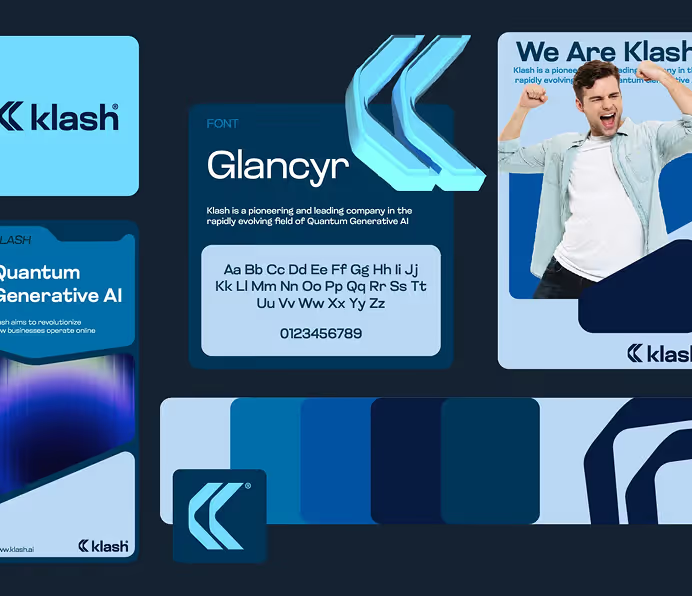
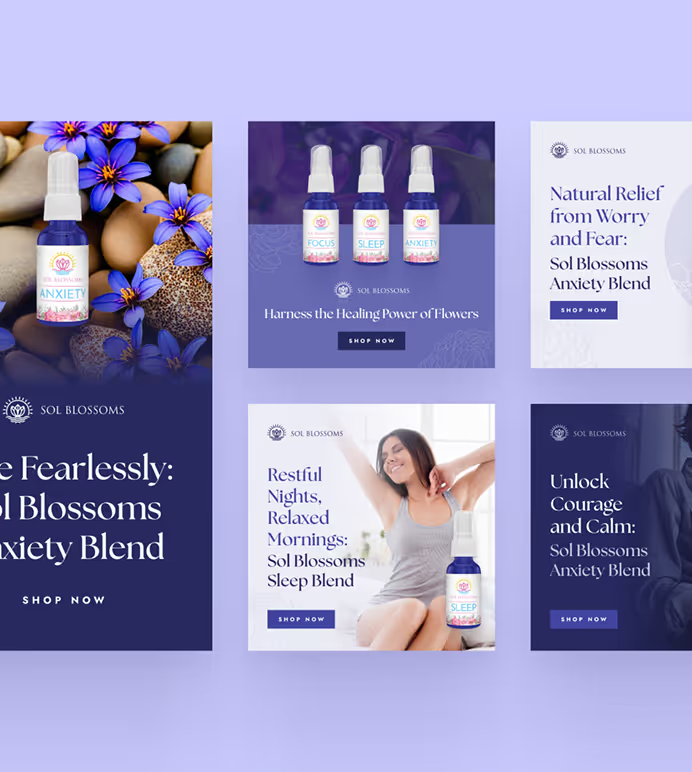
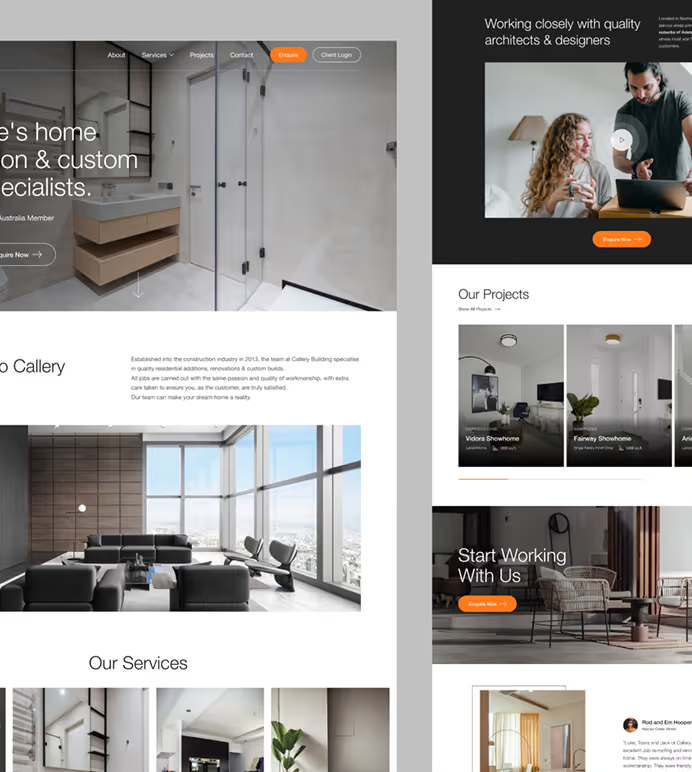
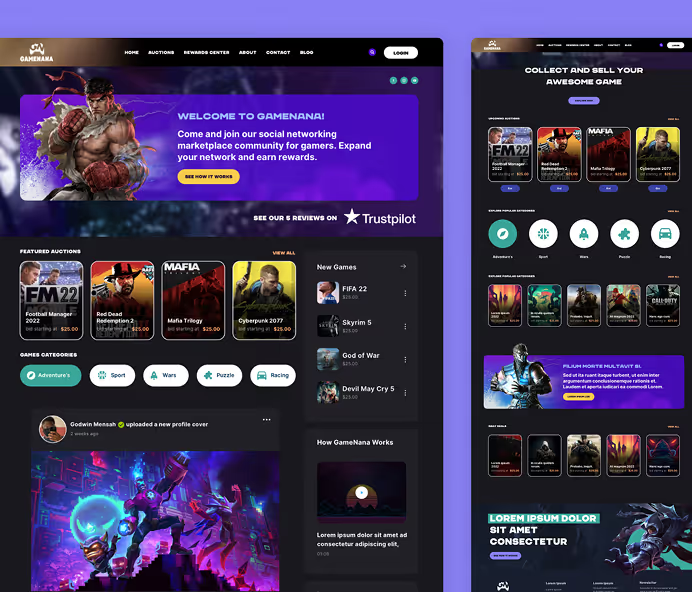
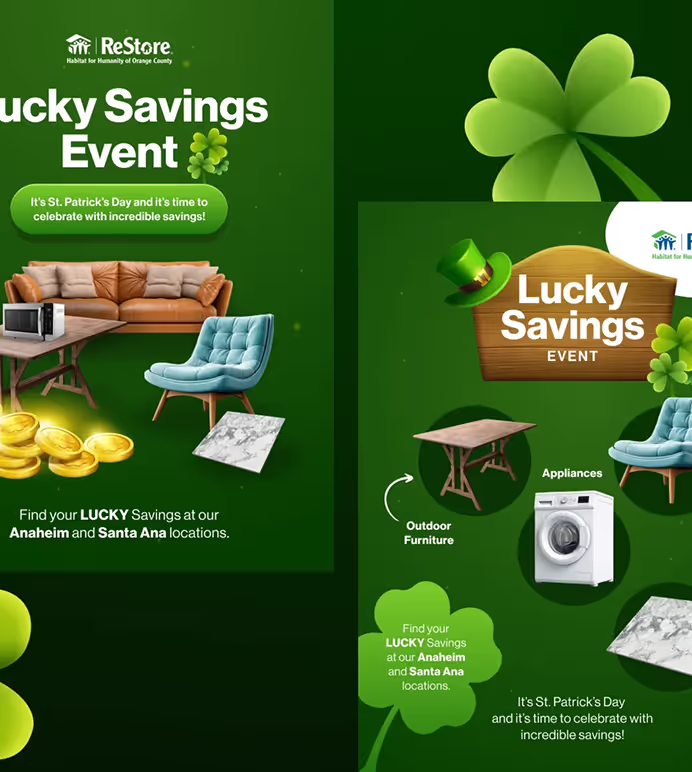
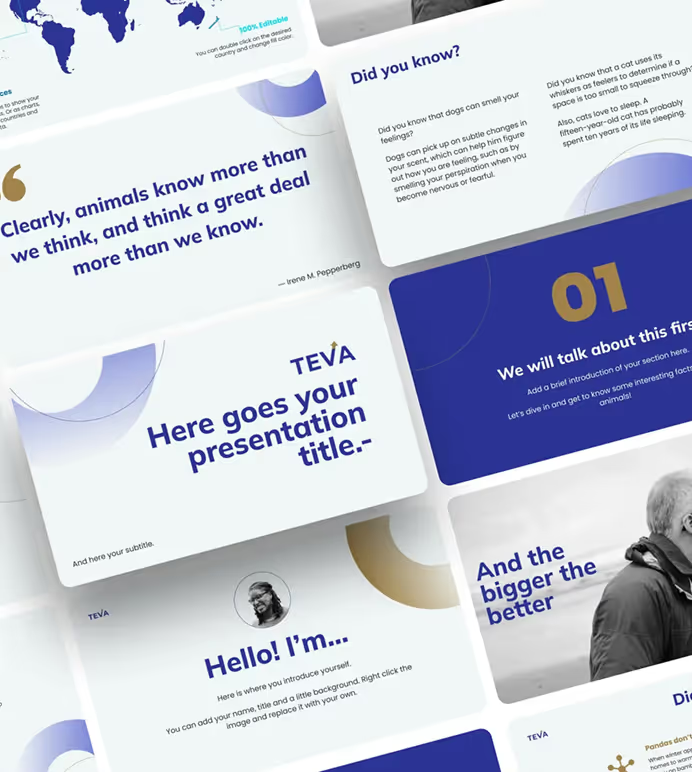
ManyPixels solves this by acting as a full design department on a flat monthly fee. You submit requests — social media graphics, email headers, donor campaign materials, event banners, presentation decks — and a professional design team delivers a daily output every business day. First drafts arrive within 24–48 hours. Revisions are unlimited. You own 100% of everything delivered.
The model that sets ManyPixels apart from other graphic design subscription services is the daily output system. Rather than completing one request at a time in a traditional queue, ManyPixels delivers tangible progress every single business day. A typical day's output is 2–3 social media graphics, or a first draft of a landing page, or 4–5 slides in a presentation. For nonprofits running ongoing campaigns, this means you're never stuck waiting weeks for a single deliverable.
ManyPixels also has a relatively small team of highly experienced designers. With the Assigned designer plan you can also get a designer working almost exclusively for you. So, you can build a lasting relationship with a designer, who’ll understand your brand and mission.
Okay, one honest flag: ManyPixels doesn't have a dedicated nonprofit discount program. The value proposition is the flat monthly rate itself, which replaces unpredictable per-project spending. For nonprofits submitting 10+ design requests a month, the math works in their favor. Below 5 requests a month, a subscription probably isn't the right fit.
Best for: Nonprofits with consistent, ongoing design needs — regular campaigns, social content, event materials — who want professional quality without managing freelancers. ✅
Not ideal for: Very small orgs with minimal design volume or a single one-off project. ❌
2. Canva for Nonprofits: best free tool for DIY design
Starting price: Free for verified nonprofit organizations
Model: Self-serve design tool
Turnaround: Instant (you do the work yourself)
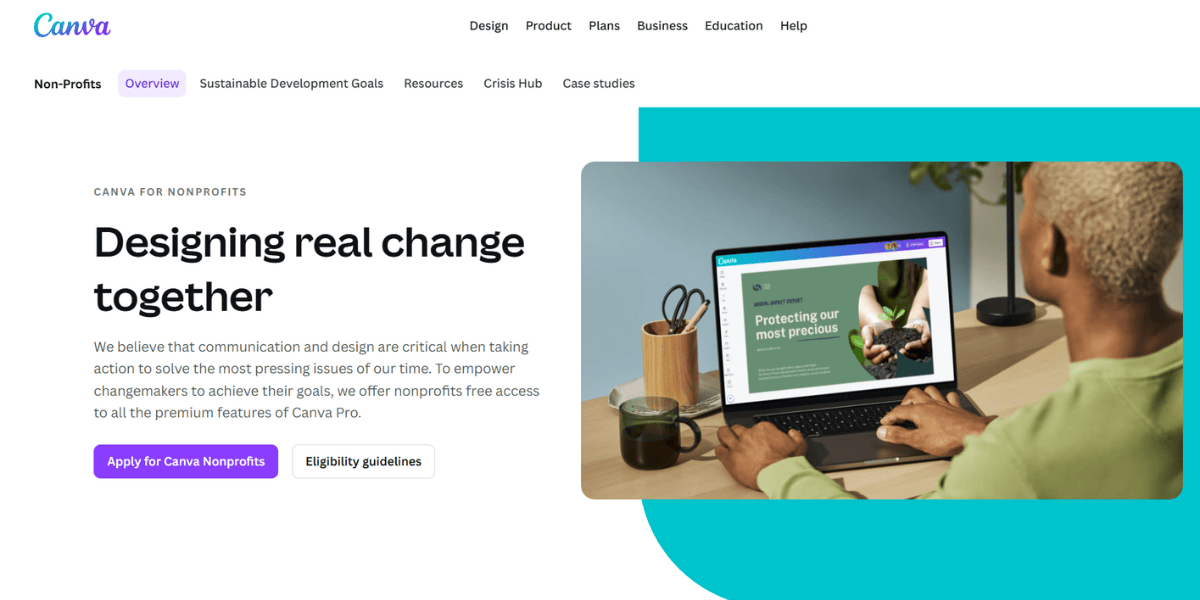
Canva for Nonprofits gives registered nonprofit organizations free access to Canva Pro, which normally costs $120/year per person. That's a meaningful benefit — Canva Pro unlocks the full template library, premium stock photos, brand kit features, and background removal.
The catch is the word "free." Canva is still a DIY tool. The free access covers the platform, not the time. Someone on your team still needs to do the design work, choosing templates, editing layouts, maintaining brand consistency across dozens of assets. This can become a real challenge for teams that are already stretched thin.
Best for: Small nonprofits with a staff member who has basic design skills and time to create assets in-house. ✅
Not ideal for: Orgs that need polished, brand-consistent output without dedicating staff time to design. ❌
3. Design Pickle: best-known design subscription
Starting price: ~$1,279/month
Model: Subscription, dedicated designer
Turnaround: 1–2 business days
Design Pickle is the most recognized name in the design subscription space and for good reason. It pioneered the unlimited design subscription model and has a large enough operation that quality is generally reliable.
Design Pickle’s entry price point is significantly higher than most of the alternatives. So, it’s only viable for larger organizations.
Design Pickle doesn't publish a formal nonprofit discount. Some nonprofits have had luck negotiating directly, but there's no structured program to point to.
Best for: Nonprofits that need graphic design basics — social graphics, flyers, print materials — and want a well-established service with a track record. ✅
Not ideal for: Orgs that need motion graphics or video as part of their deliverable mix, or those comparing cost-per-output across subscription options. ❌
4. Catchafire: best pro bono option
Starting price: Free to low-cost (organizational membership required for full access)
Model: Pro bono volunteer matching
Turnaround: Varies by volunteer availability
Catchafire is the most structured pro bono platform for nonprofits, connecting organizations with skilled professionals who volunteer their time. Since 2009, Catchafire has facilitated over $800 million in pro bono value. For a nonprofit with a design budget of approximately zero, this is the most legitimate free option available.
The tradeoff is control and timeline. You're working with a volunteer who has their own schedule, their own aesthetic sensibilities, and no ongoing obligation to your brand. A single project — a logo, a brochure, a website redesign — can go very well. Expecting the same volunteer to deliver your quarterly social content, your event materials, and your annual report is a different ask. Most pro bono relationships are project-specific, not ongoing.
For "graphic design volunteer" searches, Catchafire is consistently where the real matches happen. Volunteer Match and VolunteerHub also list design volunteers, but with far less vetting of professional skills.
Best for: Nonprofits with no design budget that need help with a specific, defined project like a logo, brochure, or event materials. ✅
Not ideal for: Orgs that need reliable, consistent design output on a regular schedule. ❌
5. 99designs: best for one-off projects like a logo or rebrand
Starting price: ~$299/project (Basic contest tier)
Model: Crowdsourced design contest or 1:1 designer hire
Turnaround: 7–10 days for contests; varies for 1:1
When a nonprofit needs a new logo, a rebrand package, or a one-time identity overhaul, 99designs is genuinely hard to beat. The contest model lets you post a brief, receive multiple concepts from different designers, give feedback, and pick the direction you like best.
99designs also runs a nonprofit program through its partnership with TechSoup, which can offer discounted contest fees for qualifying organizations. The savings vary and the program availability changes, so it's worth checking directly with 99designs or TechSoup before budgeting.
Here's the limitation to name clearly: 99designs is built for projects, not ongoing needs. Once your logo is done, you'd have to post a new contest for every subsequent deliverable. The per-project model gets expensive fast if you're producing marketing materials regularly.
Best for: Nonprofits that need a new logo, brand identity package, or one-off campaign creative and want to see multiple concepts. ✅
Not ideal for: Organizations that need regular, ongoing design support across multiple asset types. ❌
6. Penji: best for nonprofits with big results and limited budgets
Starting price: ~$995/month (or $1 a month for selected nonprofits)
Model: Subscription, dedicated designer
Turnaround: 24–48 hours
Penji is another veteran in the design subscription industry. It has a similar model to Design Pickle, and two pricing models: access to
Penji is one of the best options for nonprofits, as it has a $1 per month plan for select nonprofits. The selection process is competitive and only nonprofits with proven results can quality.
Where Penji falls short relative to its marketing is scope. Complex deliverables — multi-page annual reports, motion graphics, advanced illustration work — hit plan limits faster than the pricing suggests.
Best for: Nonprofits wanting a consistent dedicated designer experience at a mid-range subscription price. ✅
Not ideal for: Orgs with complex, multi-format deliverable needs like motion graphics or detailed illustration work. ❌
7. Kimp: best for video marketing
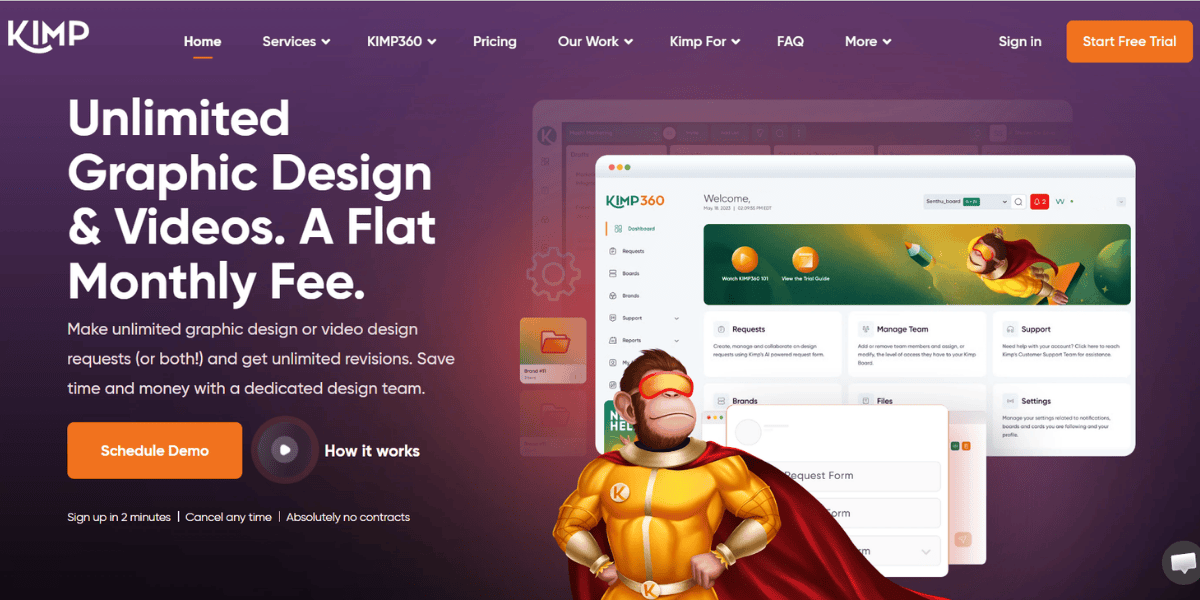
Starting price: ~$1,397/month
Model: Subscription, team-based queue
Turnaround: 24–48 hours
Kimp's Graphics plan covers the basics well: social media assets, flyers, presentations, basic print materials, and turnaround is generally within 24–48 hours.
They’re also one of the few design subscription services that have a plan exclusively for video editing and motion graphics. So, if this is your focus Kimp is a great choice. On top of that they also have separate plans for Canva designs, which is something many nonprofits need.
Best for: Nonprofits with ongoing video or Canva needs. ✅
Not ideal for: Organizations that need a mix of services; Penji and Design Pickle offer the same level of quality at a much better price.❌
8. Fiverr: best for simple, one-time tasks on a shoestring
Starting price: $5–$200+ per project
Model: Freelance marketplace (per-project gigs)
Turnaround: 1–5 days depending on seller
Be real: most "Fiverr vs. professional design service" comparisons skip the part where Fiverr actually works for certain use cases. Need a quick social media graphic resized for Instagram? A simple event flyer from a template? A headshot retouched for a staff page? These are tasks where a vetted Fiverr seller can deliver fast and at a cost that makes sense for a one-time need.
The problem is that Fiverr is wildly inconsistent. The quality range between sellers is enormous. The vetting process is minimal. In nonprofit branding your visual identity is a trust signal to donors and grant reviewers. And using a $15 Fiverr gig for your organizational logo is a gamble that often costs more in rework than a decent service would have cost upfront.
Best for: Very specific, simple, one-off tasks where budget is the primary constraint and brand stakes are low. ✅
Not ideal for: Anything that represents your organization's brand externally — donor-facing materials, reports, campaign assets. ❌
9. Superside: best for well-funded nonprofits with high creative demand
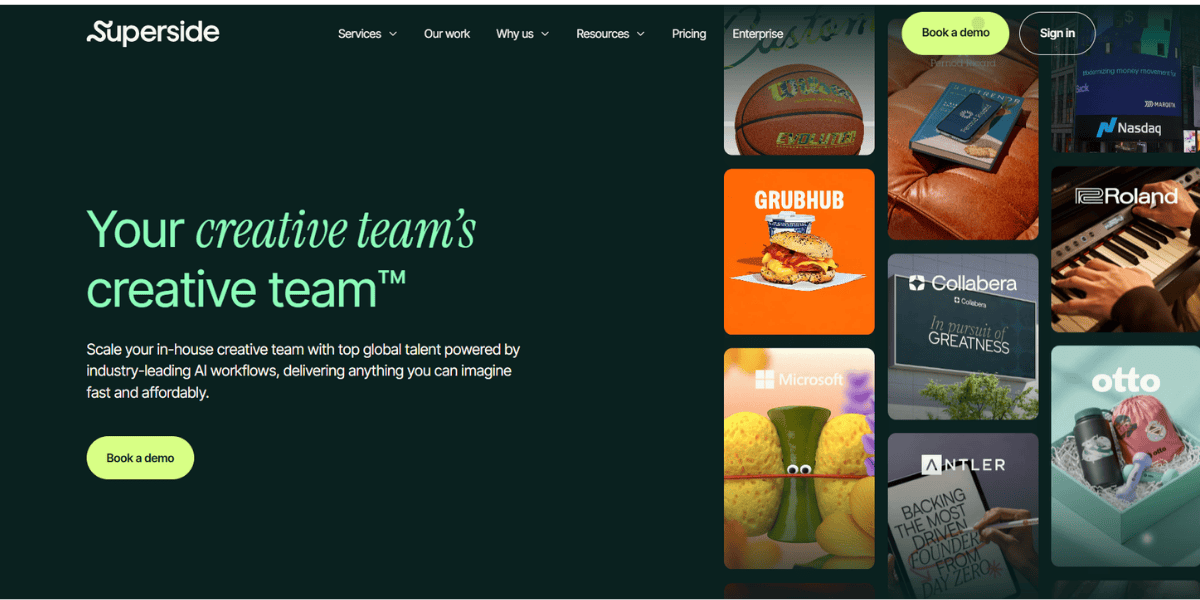
Starting price: ~$5,000/month
Model: Subscription, senior creative team with Creative Director oversight
Turnaround: Same day to 24 hours
Superside is genuinely excellent at the top end of the market. The Creative Director model, where senior strategic creatives oversee output, not just execute it is something few subscription services on this list match. If your nonprofit is running at the scale of a major national organization with a real creative budget and output demands to match, Superside is worth a conversation.
For most nonprofits, though, $5,000/month to start is an immediate non-starter. The quality difference between Superside and a well-run subscription like ManyPixels is real for complex brand strategy and campaign creative. It's less meaningful for social media graphics, flyers, and presentation decks: the bread-and-butter work that most nonprofit design queues are actually full of.
Best for: Large, well-funded nonprofits with high creative volume and genuine need for senior creative strategy alongside production. ✅
Not ideal for: Any organization where $5,000/month represents a significant portion of the annual design budget. ❌
10. Upwork: best for finding a vetted freelancer for mid-complexity work
Starting price: $25–$150/hour depending on designer experience
Model: Freelance marketplace (hourly or fixed-price projects)
Turnaround: Varies by project scope and designer
Upwork sits between Fiverr (low cost, lower vetting) and a full agency (high cost, high service). For a nonprofit that needs a specific mid-complexity deliverable (e.g. a multi-page report template, a set of brand guidelines, landing page redesign,etc.) hiring a vetted Upwork freelancer is a reasonable approach.
The advantage over Fiverr is the profile system. You can see a freelancer's full work history, client reviews, portfolio, and hourly rate before reaching out. For nonprofit logo design, a small brand refresh, or a one-off publication design, this level of vetting makes a real difference.
The limitation is the same as all freelance models: no continuity. A great Upwork designer finishes your project and moves on. If you need them again next month, they may be unavailable or have raised their rate.
Best for: Nonprofits with a specific, defined mid-complexity project and time to vet and manage a freelancer. ✅
Not ideal for: Organizations that need reliable, ongoing design output without the overhead of recurring freelancer management. ❌
What graphic design do nonprofits actually need?
Nonprofits typically need seven categories of design on a recurring basis:
- social media graphics
- email campaign assets
- event materials (flyers, banners, programs)
- presentation decks for board and donor meetings
- nonprofit annual report design
- website graphics
- fundraising campaign creative
The volume varies by organization size, but even small nonprofits producing weekly social content can accumulate 30–50 design requests per quarter, which far more than most people budget for initially.
The category most nonprofits underestimate is the annual report. A well-designed nonprofit annual report does more fundraising work than any single social media post. Donors and foundation reviewers use it to assess organizational credibility and financial transparency.
Nonprofit branding, the underlying visual identity system that makes all of the above look cohesive, is often a separate investment from ongoing production design. If your organization doesn't have a defined color palette, typography system, and logo usage guidelines, that's the starting point before worrying about which subscription to choose.
Do nonprofits get discounts on graphic design?
Some do, but not consistently.
✅ Canva offers free Pro access to verified nonprofits through TechSoup.
✅ Catchafire provides pro bono design matching at no cost.
✅ 99designs has offered nonprofit discounts through TechSoup partnerships, though availability changes.
✅ Penji offers a $1 subscription for nonprofits, but the program is very competitive.
However, the most consistent "discount" for nonprofits is choosing a flat-rate subscription model over per-project freelance billing, which eliminates cost unpredictability regardless of how many requests you submit in a given month.
Which graphic design service is right for your nonprofit?
If your organization has no design budget at all, start with Canva for Nonprofits for in-house DIY work, and post a project on Catchafire for anything that requires professional-quality output. 👉
If you need a one-off logo, rebrand, or identity package, 99designs' contest model gives you multiple concepts to compare — useful when a board or executive team needs to be involved in the decision. 💡
If you have consistent, multi-format design needs - social content, campaign materials, reports, presentations - a ManyPixels subscription delivers daily output at a predictable monthly cost that replaces the patchwork of freelancers most nonprofits currently manage. The pause option also fits nonprofit budget cycles better than a rigid annual contract. ✅
If your nonprofit operates at significant scale with senior creative strategy needs and the budget to match, Superside is the option worth evaluating. Otherwise, the price difference relative to the output difference doesn't justify the gap for most organizations. 🤔
Why nonprofits choose ManyPixels
ManyPixels replaces that patchwork with a single subscription covering everything — social graphics, email headers, print materials, presentation decks, web design, motion graphics, and more — delivered at a daily output cadence.
- 💰 Predictable monthly cost — no surprise invoices, no per-project negotiations
- ⚡ 24–48 hour first drafts, with same-day turnaround on Assigned designer plans
- 🎨 One consistent design team that learns your brand, your donors, and your recurring formats
- 🔄 Unlimited revisions until you're satisfied — no extra charges for iteration
- ⏸️ Pause for $10/month between campaigns or grant cycles — resumes exactly where you left off
Frequently asked questions
Is Canva free for nonprofits?
Yes. Canva offers free Canva Pro access to registered nonprofit organizations through its Canva for Nonprofits program. Eligible organizations must be a registered 501(c)(3) in the US (or equivalent), non-governmental, and non-political. Verification is handled through TechSoup and typically takes a few days. Once approved, the entire team at your organization can access Canva Pro features at no cost.
What is the cheapest graphic design service for nonprofits?
The cheapest option is Canva for Nonprofits (free) or Catchafire (free pro bono matching). For paid ongoing design, ManyPixels starts at approximately $599 /month and is the most affordable subscription service. For one-off projects, Fiverr has the lowest per-project floor, though quality varies significantly between sellers.
Can nonprofits get free graphic design help?
Yes, through two main channels. Canva for Nonprofits gives verified organizations free access to Canva Pro for in-house design work. Catchafire matches nonprofits with professional graphic design volunteers who donate their time pro bono. The AIGA Design for Good initiative also connects nonprofits with design professionals for short-term project support. Free help is real — the tradeoff is control over timeline and output consistency.
Is a design subscription worth it for a nonprofit?
It depends on your design volume. If your organization submits fewer than 5 design requests a month, a subscription is probably not cost-effective — a mix of Canva and an occasional freelancer makes more sense. Above 10–15 requests per month across multiple formats, a flat-rate subscription almost always delivers better cost-per-output than managing freelancers. The break-even point is lower than most nonprofits expect.
What should be included in a nonprofit annual report design?
A nonprofit annual report typically includes a letter from the executive director or board chair, program highlights with impact statistics, financial summaries and charts, donor recognition lists, and photography or illustration showcasing the organization's work. From a design standpoint, it should be consistent with your brand identity and formatted for both print and digital distribution. Reports that are poorly designed often undermine the credibility of the data they contain, regardless of program outcomes.
Do design subscription services work for nonprofit branding?
Yes, with one caveat. Design subscription services excel at production design — ongoing output of social graphics, email assets, flyers, presentations, and reports. For brand strategy and identity development (creating a new logo, defining brand guidelines, building a full visual identity system from scratch), a one-off approach through 99designs or a dedicated freelancer is often a better fit. The subscription handles execution; the identity work is usually a separate project first.
How fast do graphic design services typically turn around work for nonprofits?
Turnaround depends on the service model. Subscription services like ManyPixels, Design Pickle, and Penji typically deliver first drafts within 24–48 hours. Fiverr sellers vary from 1 to 5 days. 99designs contests run 7–10 days for the full concept round. Catchafire and pro bono volunteers operate on the volunteer's schedule, which can range from a few days to several weeks depending on availability and project complexity.
Bottomline
For most nonprofits, the right answer isn't the cheapest option — it's the most predictable one. 🎯 Canva for Nonprofits is the best starting point for orgs with staff time to DIY. Catchafire is the best path when the budget is truly zero.
And for organizations that have moved past the "volunteer and template" stage and need reliable, professional design output across multiple formats, ManyPixels' flat-rate subscription delivers the best combination of quality, turnaround, and cost predictability of any service on this list.
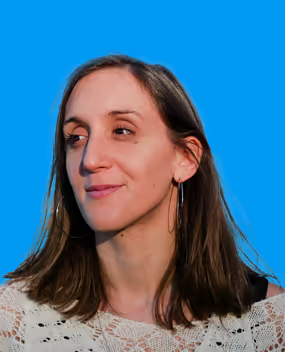
Having lived and studied in London and Berlin, I'm back in native Serbia, working remotely and writing short stories and plays in my free time. With previous experience in the nonprofit sector, I'm currently writing about the universal language of good graphic design. I make mix CDs and my playlists are almost exclusively 1960s.

Top-quality designers
A complete creative team at your fingertips: graphic and web designers, illustrators, and more.
Lightning-fast turnaround
Get start today and receive your first update on the next business day.
All-inclusive pricing
Unlimited requests and revisions. One flat monthly fee. No surprises.
Flexible & scalable model
No contract. Scale up and down as needed. Pause or cancel at anytime.
Continue reading
Explore some of our best designs
Get inspired by a curated selection of ManyPixels work. Download the portfolio to see what our team can create.